Rowing machines sell a feeling before they sell a specification, and the resistance system is where that feeling is made. Water and magnetic rowers can match each other on console, rail length and even price — and still deliver two entirely different products: one that whooshes and responds like a boat, one that hums quietly and counts precisely. Choosing between them is therefore a customer-profiling decision more than an engineering one, and getting it right is worth real money: the rower is one of the few cardio SKUs buyers display in living spaces, which makes it the cardio machine whose appearance and sound are reviewed most publicly. This comparison covers how each system generates resistance, how each sounds and ages, the wood-rail versus steel-rail frame decision, and the buyer profiles each machine wins — ending with the spec checklist to demand before you commit an order.
How water resistance actually works
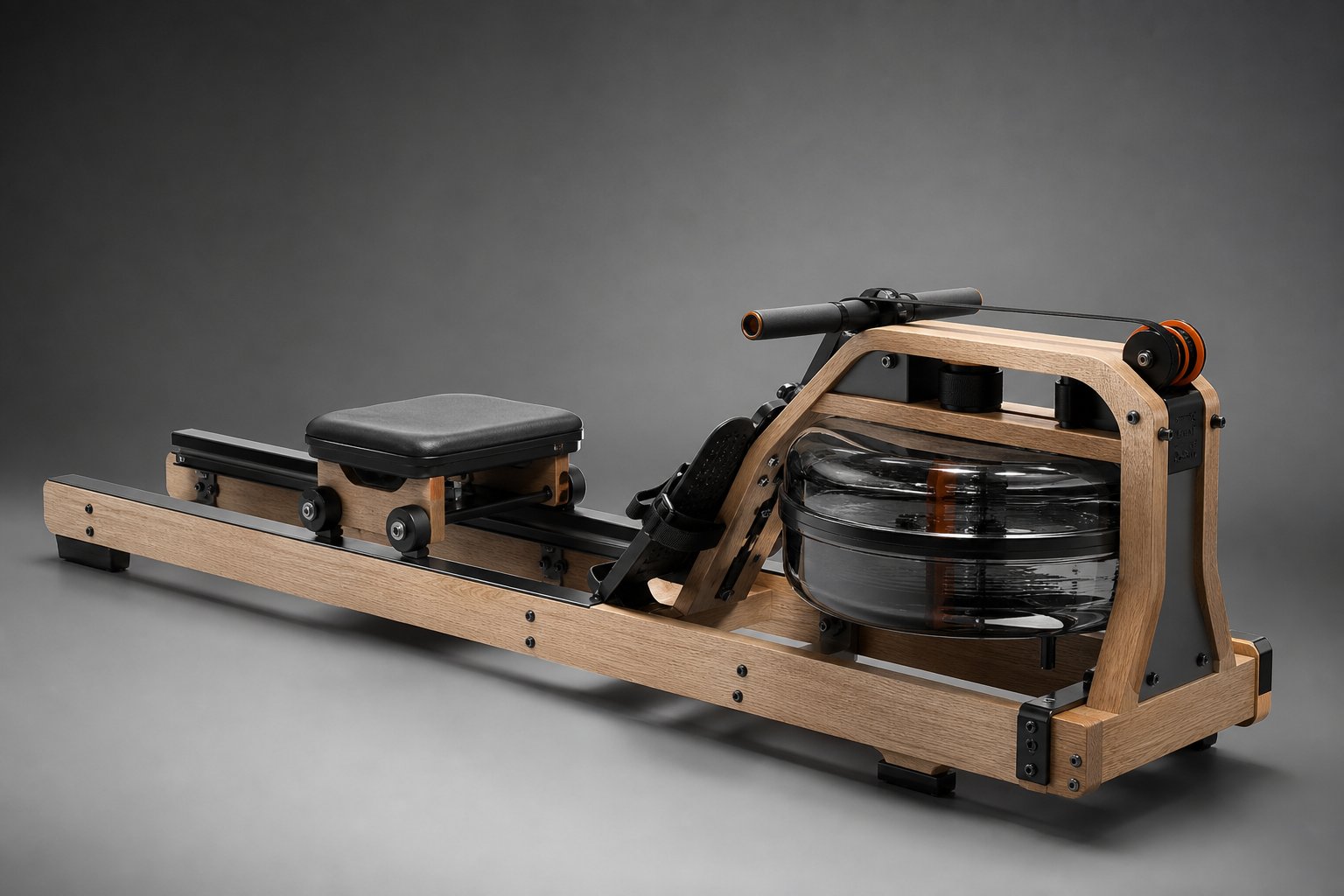
A water rower pulls a paddle through a tank of water, and every property of the stroke follows from that arrangement. Resistance rises with effort: pull harder and the water pushes back harder, which reproduces the natural feedback loop of on-water rowing better than any stepped system. The sound is part of the product — the swirl and splash of the tank is exactly the association buyers have with the sport, which is why water rowers photograph and film so well for lifestyle listings. The trade is maintenance honesty: the water needs occasional treatment to stay clear, the tank wants a level spot and protection from freezing and direct sun, and a buyer who ignores all of it will eventually have a cloudy tank and an opinion about your brand. Water rowers therefore sell best to buyers who will read the manual — design-conscious home users for whom the machine is also furniture — and they reward the seller who ships clear water-treatment instructions in the box.
How magnetic resistance actually works
A magnetic rower creates resistance by moving magnets close to a metal flywheel — no contact, no fluid, no consumables. The practical consequences stack up on the magnetic side of the comparison. Resistance comes in digitally stepped levels set from the console, so workouts are repeatable and programmable to the exact level. Operation is near-silent: no splash, no whoosh, just the hum of the flywheel and the rail rollers, which makes magnetic rowers the default answer for apartments, early-morning training and any room that shares a wall with a sleeping household. Maintenance is minimal — no water treatment, no tank, nothing to freeze. The trade is feel: precise and smooth, but flatter than the effort-proportional surge of water, and the sound — or absence of it — carries none of the rowing romance. Magnetic rowers are the rational recommendation for studios and high-cycle home users, where consistency and quiet outvalue atmosphere.
Wood rail versus steel rail: the frame decision
The resistance system usually travels with a frame philosophy. Solid-wood rails — ash and similar hardwoods in our line — pair naturally with water tanks and sell the design story: a machine that looks like furniture, leans against a wall, and survives an interior-design photoshoot. Wood needs honest disclosure: grain variation exists between units, humidity swings matter more than for metal, and the finish spec should be stated. Steel rails pair naturally with magnetic systems and sell tolerance and toughness: dimensionally stable, tighter production tolerances on the rail profile, and a lower price point at equivalent spec. For a catalog, the pairing simplifies merchandising — wood-water as the premium lifestyle SKU, steel-magnetic as the performance and value SKU — though the combinations do cross at the high end. What must not vary is the underlying discipline: rail flatness, seat-roller quality and belt or chain alignment are checked under the same QC standard whichever frame the buyer chooses.
| Dimension | Water rower | Magnetic rower | Reseller note |
|---|---|---|---|
| Resistance feel | Effort-proportional, on-water feedback | Stepped digital levels, repeatable | Feel is the water pitch; precision the magnetic pitch |
| Noise | Swirl and splash, audible | Near-silent hum | Noise decides apartments and shared walls |
| Maintenance | Water treatment routine | Effectively none | Ship treatment instructions in every box |
| Frame options | Solid wood or steel | Steel typical | Wood sells lifestyle; steel sells tolerance |
| Placement | Design-forward home, display spaces | Apartments, studios, high-cycle use | Match sound and upkeep to buyer |
| Usage class | Class S or H per EN ISO 20957-7 | Class S or H per EN ISO 20957-7 | State the class on every spec sheet |
| Freight | Tank protection matters in packing | Conventional carton | Drop-tested export packing either way |
Which buyer buys which
Segment the question by where the machine will live and how it will be used. The design-forward home buyer — the one who chose the rower because it looks better than a treadmill in a living room — buys water, accepts the maintenance as part of owning something beautiful, and writes long reviews about the experience. The apartment and shared-wall buyer buys magnetic, because the sound profile decides the purchase before the feel does. The studio buyer buys magnetic almost without exception: machines in commercial rotation need consumable-free operation, stepped levels for class programming and Class S qualification under EN ISO 20957-7. The performance-minded rower who trains for the sport often ends up on water for realism, sometimes alongside an ergometer-standard machine. One more segment is worth naming: gift and occasion buyers, who convert strongly on water rowers because the unboxing photographs like furniture — a fact worth remembering when you plan Q4 imagery.
The spec checklist before you order
Run any rower quote through five lines. One: resistance specification — tank volume and paddle system for water; level count and control type for magnetic. Two: rail material and finish, with wood grain and humidity disclosure if solid wood. Three: measured noise at a stated pace, in decibels — the number your apartment buyers are actually purchasing. Four: rated user weight and rail length, which together define who fits and how the stroke feels for taller users. Five: the usage class under EN ISO 20957-7 and the packing spec — water tanks need internal padding and a drop-tested carton far more than a magnetic console does. A supplier who answers all five lines precisely will ship rowers that match their listings; a supplier who goes vague on noise or water treatment is deferring those conversations to your review section.
Conclusion
Water versus magnetic is a choice about the customer, not about the better machine. Water sells feel, sound and beauty to buyers who will care for it; magnetic sells precision, silence and zero upkeep to buyers who will use it hard. Frame the wood-and-water premium SKU against the steel-and-magnetic workhorse, state the class and the noise figure, and pack the tank like the fragile centerpiece it is. Carry both and your rower listing starts doing segmentation work for your whole cardio line. Send us your channel and buyer profile, and we will quote the matching rower program — with the five-line spec sheet filled in and sample lead times attached.
Frequently asked questions
Which is quieter, a water rower or a magnetic rower? Magnetic, by a wide margin: operation is a near-silent flywheel hum. Water rowers produce a pleasant but audible swirl and splash, which is exactly why apartment and shared-wall buyers default to magnetic.
How much maintenance does a water rower need? Occasional water treatment to keep the tank clear, a level placement, and protection from freezing and direct sun. It is a simple routine, but it must be disclosed — shipping treatment instructions in the box prevents most tank complaints.
Are wooden rails as durable as steel rails? Different durable, not less: hardwood rails are dimensionally stable when humidity is reasonable, and they sell a design story steel cannot. Steel rails offer tighter production tolerance and a lower price at equivalent spec. Choose by buyer, not by fear.
Can magnetic rowers be used in commercial studios? Yes — they are the default studio choice. Confirm Class S qualification under EN ISO 20957-7, stepped levels for class programming, and a duty cycle the supplier states in writing for commercial rotation.