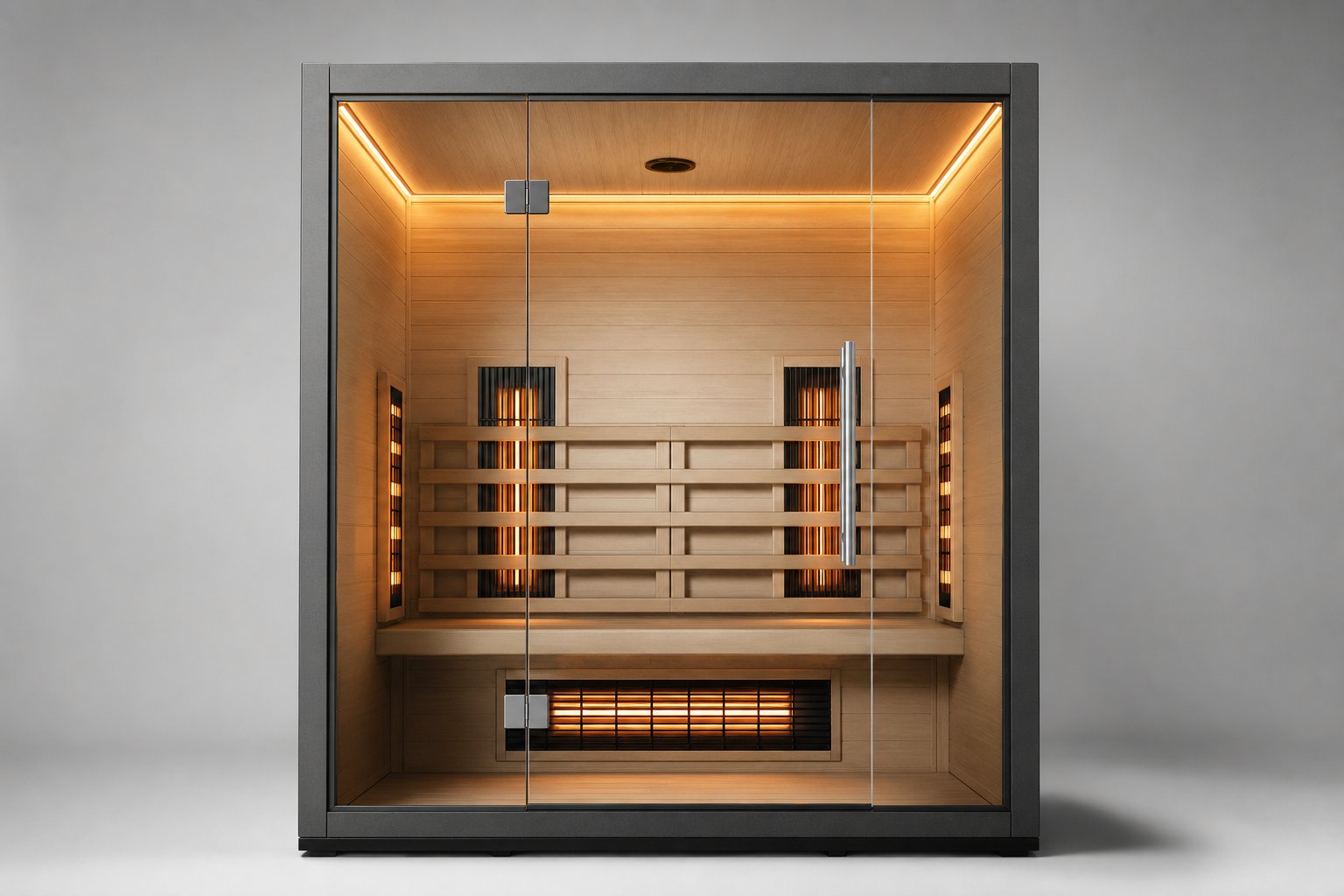
Sauna demand has split into two genuinely different products wearing the same name. Traditional sauna heats the air using an electric stove and volcanic rock, producing high ambient temperatures with a steam option (löyly). Infrared sauna uses carbon-fiber or ceramic panels to radiate heat directly at the body at lower ambient air temperature. Sellers who understand the difference in heat source, power draw and buyer profile can stock both without either cannibalizing the other, and can answer the one question every serious buyer eventually asks: which one is actually right for me.
Heat source: radiant versus convective
The physics genuinely differ. A traditional sauna heater brings volcanic rock to high temperature, which then heats the surrounding air by convection; pouring water on the rocks produces steam (löyly) that raises humidity and perceived heat. An infrared cabin uses carbon-fiber or ceramic panels that radiate heat directly, warming the body's surface before it substantially warms the room air. This is why infrared cabins feel comfortable at 40-60°C ambient while traditional saunas run 70-90°C — the infrared heat is landing on skin directly rather than working through hot air.
Power draw and installation: the practical decision-maker
Traditional stoves typically draw 4.5-9kW for a home-size cabin, often requiring a dedicated circuit and sometimes 3-phase power for larger units — a real installation constraint in many residential markets. Infrared panels draw meaningfully less, commonly 1.5-3kW for a 1-2 person cabin, which fits a standard household circuit in most markets and removes a major installation barrier. This single difference is why infrared has grown fastest in the apartment and small-home segment, while traditional sauna remains the choice for buyers building a dedicated wellness room with proper electrical planning.
Warm-up time and session length
Infrared cabins reach usable temperature in roughly 10-15 minutes; traditional saunas typically need 30-45 minutes to fully heat the rock bed. Session length also differs by convention: infrared sessions commonly run 20-30 minutes at lower ambient heat, traditional sauna sessions run shorter (10-20 minutes) at much higher heat with cooldown breaks. Neither is more or less effective — they are different experiences, and product copy should describe the experience rather than imply one is medically superior to the other.
Cabin sizing and wood species
1-2 person cabins are the dominant home SKU by volume; 3-4 person cabins serve boutique studios, gyms with a recovery corner, and premium home builds. Wood species affects both cost and durability: Canadian hemlock is the common mid-tier choice, while cedar carries a natural resistance to moisture and a distinct aroma that some buyers pay a premium for. Panel or heater wattage per cubic meter of cabin volume is the spec that determines whether a unit reaches its rated temperature reliably — undersized heaters are the most common cause of underwhelming reviews.
| Spec | Traditional | Infrared |
|---|---|---|
| Heat source | Stove + volcanic rock | Carbon or ceramic panels |
| Ambient temp | 70-90°C | 40-60°C |
| Power draw | 4.5-9kW | 1.5-3kW |
| Warm-up time | 30-45 min | 10-15 min |
Maintenance and running cost: the ownership question buyers ask second
Buyers rarely ask about running cost in the first message, but it is almost always the second or third question once they are seriously comparing options, and a listing that answers it proactively closes the sale faster. Beyond the purchase price, ownership cost diverges by heat source. Traditional cabins need periodic rock replacement (thermal cycling gradually cracks volcanic rock, typically every 1-3 years of regular use) and consume meaningfully more electricity per session given the higher wattage and longer warm-up. Infrared panels have no consumable heating element to replace and draw less power per session, though panel lifespan itself (commonly rated for several thousand hours) should be disclosed by the supplier rather than assumed. For sellers, publishing an honest running-cost comparison — even an approximate one — builds the same trust that a published spec sheet does anywhere else in a serious catalog, and preempts the post-purchase electricity-bill complaints that show up in reviews when a buyer discovers a 9kW stove was never going to be cheap to run daily. A simple per-session cost estimate, based on local electricity rates and the cabin's rated wattage and typical session length, is enough disclosure to set expectations correctly without overengineering the claim. Sellers who publish this comparison alongside the spec table consistently see fewer post-purchase support tickets about utility bills, which is a small but real reduction in customer-service load worth the two extra lines of copy.
Conclusion
Traditional and infrared sauna are two products, not two tiers of the same product. Traditional serves buyers who want the steam-capable, high-heat heritage experience and have the electrical capacity to install it; infrared serves apartment and small-home buyers who want a lower-power, faster warm-up option. Stock both, describe the physics honestly, and let the buyer's installation constraints and experience preference decide. Send us your target market's typical household voltage and circuit standard and we will match the heater spec accordingly.
Frequently asked questions
Is infrared sauna less effective than traditional sauna? They are different experiences rather than a strength ranking — infrared radiates heat directly at lower ambient temperature, traditional sauna heats the air and can produce steam at higher temperature.
Why does power draw matter so much for sauna sales? Traditional stoves often need a dedicated or 3-phase circuit, a real installation barrier in many homes; infrared panels typically run on a standard household circuit, which removes that barrier for apartment buyers.
What wood species should I stock for cabins? Hemlock is the common mid-tier choice; cedar offers natural moisture resistance and aroma that supports a premium price point.