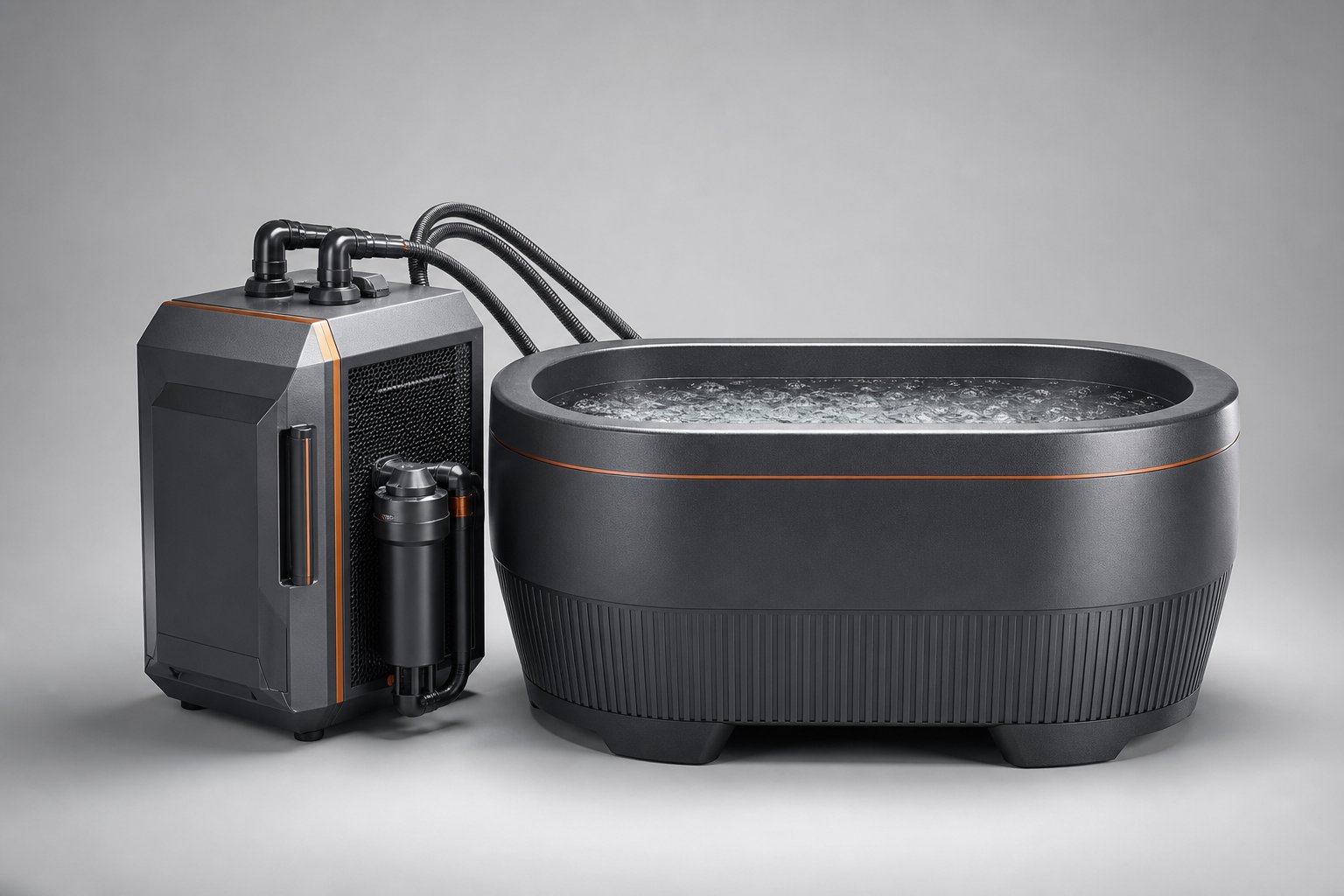
Ice baths used to mean a tub, a bag of ice and a thermometer. The category has moved on: a standalone chiller unit is now the product buyers actually compare, and the specs that separate a serious unit from a glorified aquarium pump are measurable — temperature range, cooling rate, flow rate and noise. Sellers who can explain these four numbers win the trust of the exact buyer segment driving this category's growth: studios and serious home users who tried a bag-of-ice setup once and want the real thing next.
Temperature range: report the floor, not the headline
Every chiller listing claims a low temperature, but the number that matters is the floor the unit can sustain in real ambient conditions, not a lab-test best case. A unit rated to reach 3°C in a controlled 20°C room may only reach 6-7°C in a garage at 32°C ambient, which is a meaningfully different product experience for the buyer. Ask suppliers for the tested floor temperature at a stated ambient condition, not just a single headline figure, and disclose that condition on your own listing — it is the single most common source of disappointed reviews in this category.
Cooling rate: the number that decides usability between sessions
A chiller that reaches an impressively low floor temperature but takes six hours to cool a full tub from room temperature is not useful for a studio running back-to-back client sessions. Cooling rate, expressed as degrees per hour from a full warm-water start, tells the buyer whether the unit can recover between uses. Commercial-grade units built for studio throughput typically cool 1-2°C per hour more than home-tier units of similar tank size, and that difference is worth surfacing explicitly for channel-specific listings rather than burying it in a single generic spec sheet.
Flow rate and filtration: the part that decides water quality, not just temperature
The pump that circulates water through the chiller's refrigeration coil also typically runs the filtration loop, and its flow rate — measured in liters per minute — affects both how evenly the tub reaches target temperature and how clear the water stays between full changes. A higher flow rate reduces dead zones where warm water pools and shortens the interval between filter changes needed to keep water sanitary for repeat multi-user sessions, which matters far more for studio buyers than home buyers using their own tub solo.
Noise: the spec that determines where a unit can actually live
Chillers run continuously to maintain temperature, unlike most fitness equipment that is used and then silent. A unit rated at 55 dB(A) sounds reasonable on a spec sheet but is genuinely intrusive parked next to a bedroom or open living area for hours; buyers placing units indoors should be told the measured noise level at 1 meter, not just a marketing descriptor like "quiet operation." Compressor type matters here too — rotary compressors typically run quieter than older reciprocating designs at a comparable cooling capacity.
Sizing to tub volume: the mismatch that causes most complaints
A chiller undersized for its paired tub volume will never reach its rated floor temperature and will run continuously trying, which shortens compressor life and inflates the buyer's electricity bill without delivering the promised temperature. Match chiller cooling capacity (measured in BTU/hr or liters cooled per hour) to actual tub volume rather than selling chillers and tubs as unrelated SKUs — a paired recommendation on the listing, even an approximate one, prevents the single most common support ticket in this category.
| Spec | Home tier | Studio tier |
|---|---|---|
| Floor temperature | 5-7°C (real ambient) | 3-4°C (real ambient) |
| Cooling rate | ~1°C/hour | 2-3°C/hour |
| Flow rate | 10-15 L/min | 20-30 L/min |
| Noise @ 1m | 50-55 dB(A) | 45-50 dB(A) |
Water treatment and hygiene: the spec buyers forget until it fails
A shared or repeatedly used ice bath needs a water treatment plan beyond filtration alone, and this is a spec category most listings skip entirely. Ozone generation and UV sterilization are the two common approaches paired with mechanical filtration; ozone breaks down organic contaminants effectively at cold temperatures where chlorine-based sanitizers lose efficacy, which is precisely the condition an ice bath operates in. Studios running multiple users per day should treat water-treatment method as a headline spec rather than an afterthought, since it is the difference between a tub that stays usable for a full week between full drains and one that develops a cloudy, unpleasant surface film within days. Home buyers using a single-person tub have lighter requirements but still benefit from knowing whether a basic carbon filter alone is sufficient or whether periodic ozone dosing is recommended by the manufacturer.
\nConclusion
A chiller spec sheet that states floor temperature at a real ambient condition, cooling rate in degrees per hour, flow rate in liters per minute and measured noise in dB(A) tells a buyer everything a marketing paragraph cannot. Publish those four numbers, pair the chiller with a matched tub volume recommendation, and your recovery category earns the credibility that turns a curious browser into a repeat-session studio customer. Send us your target tub size and placement (indoor or garage) and we will match the chiller spec accordingly.
Frequently asked questions
Why does the ambient temperature matter for chiller specs? A unit's floor temperature is only meaningful alongside the ambient condition it was tested at — the same unit performs differently in a 20°C room than a 32°C garage.
What is cooling rate and why does it matter more than floor temperature alone? Cooling rate (degrees per hour) determines how quickly a unit recovers between sessions, which matters most for studios running back-to-back appointments.
How do I avoid chiller-tub mismatch complaints? Match chiller cooling capacity to actual tub volume and publish a paired recommendation on the listing rather than selling them as unrelated SKUs.