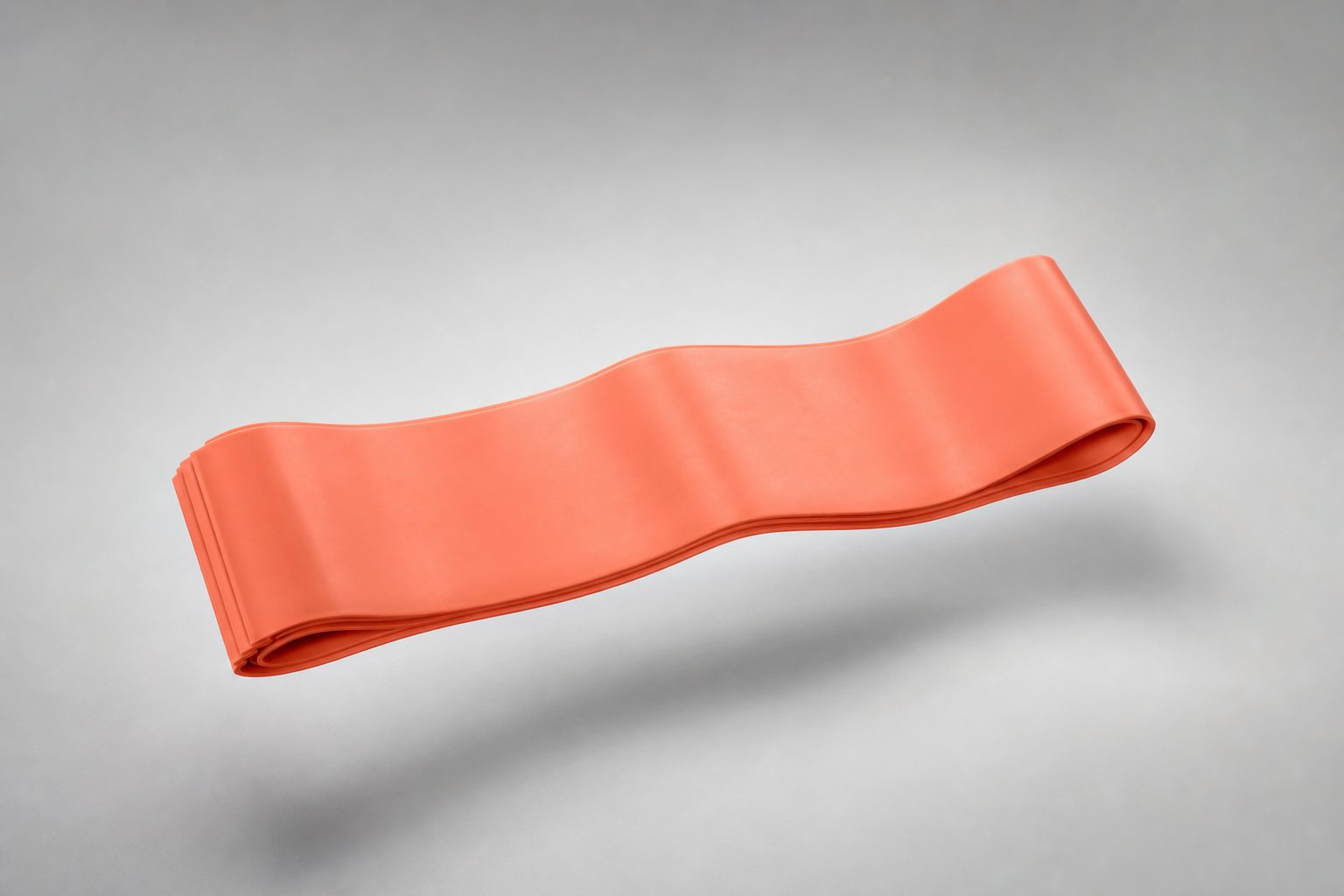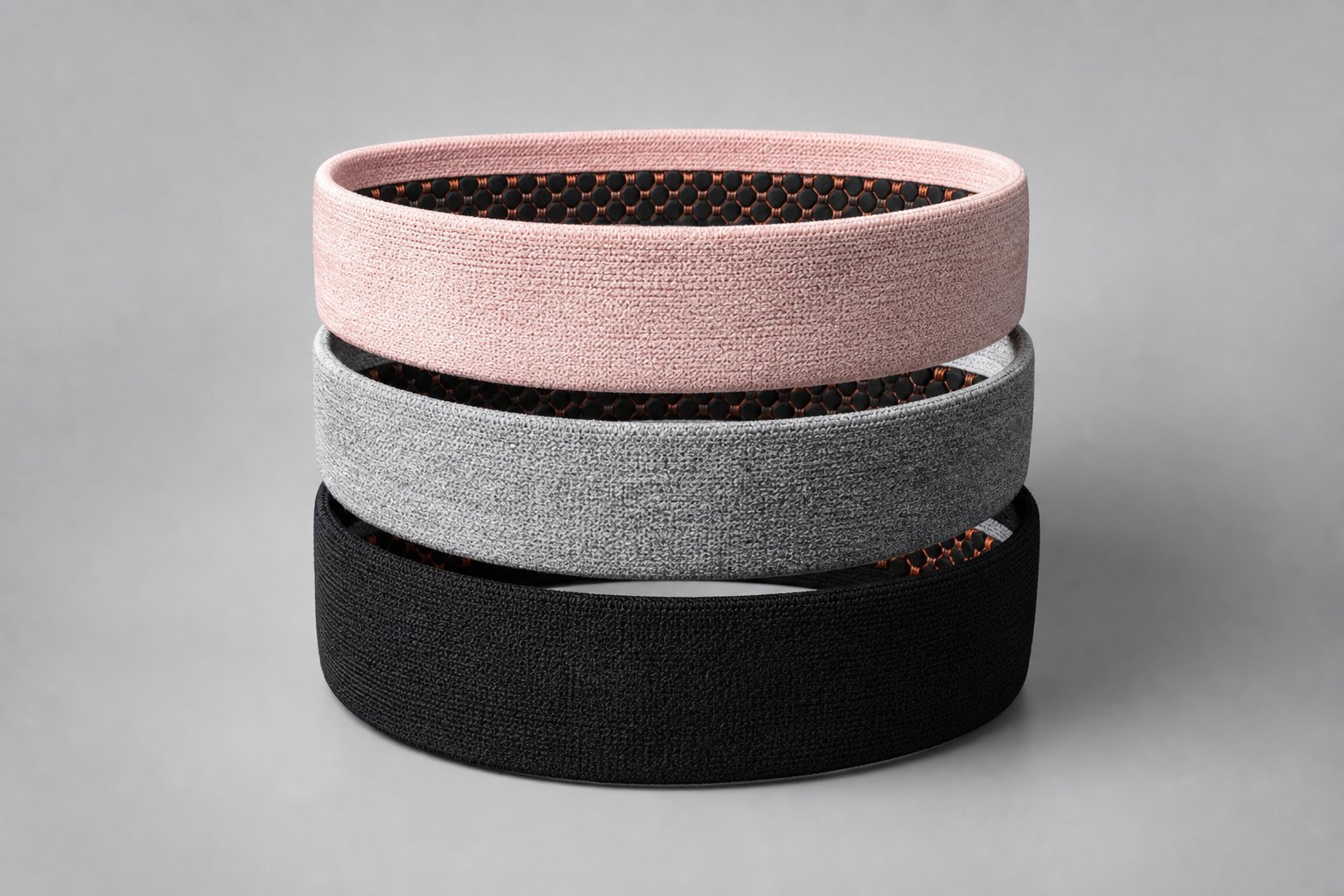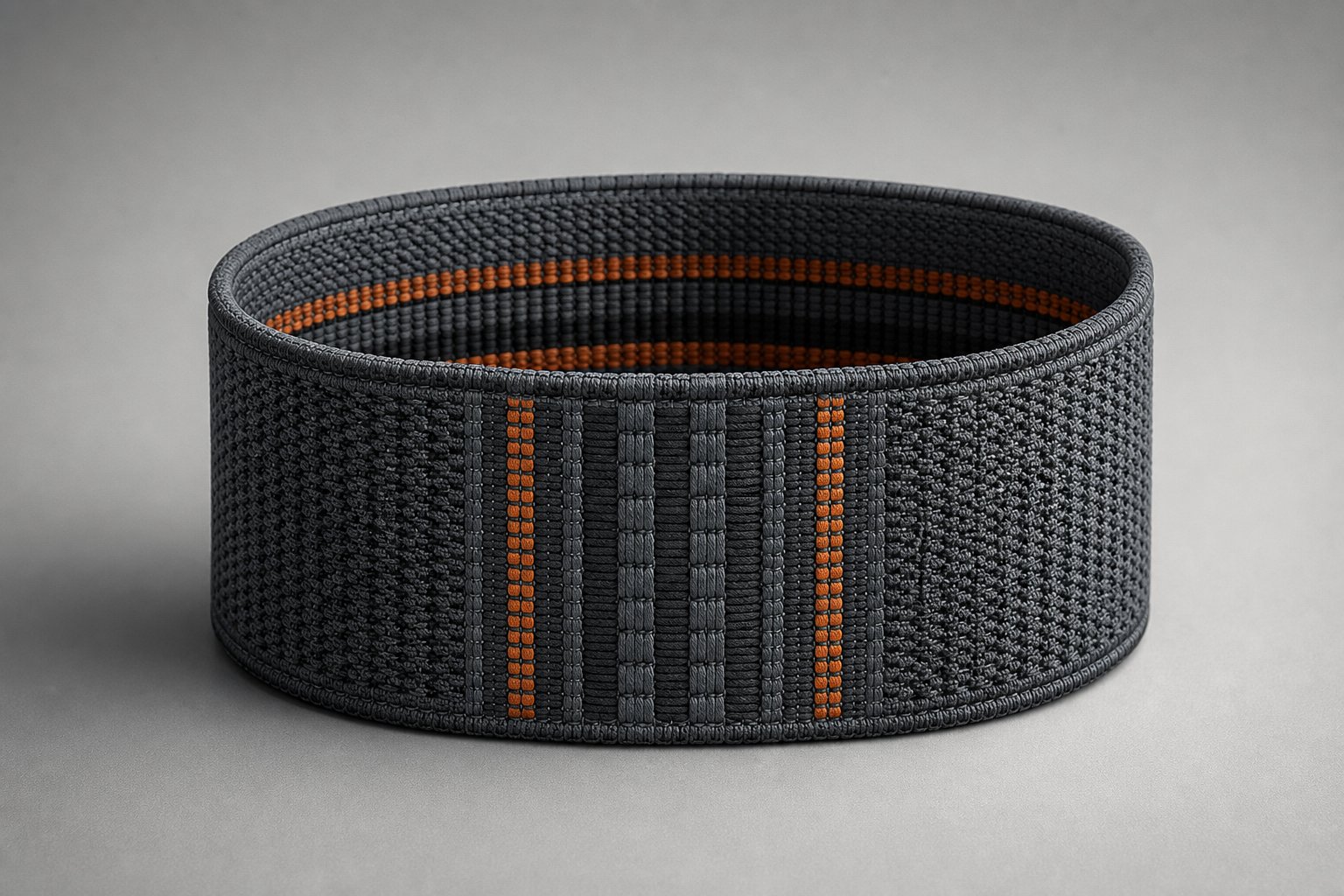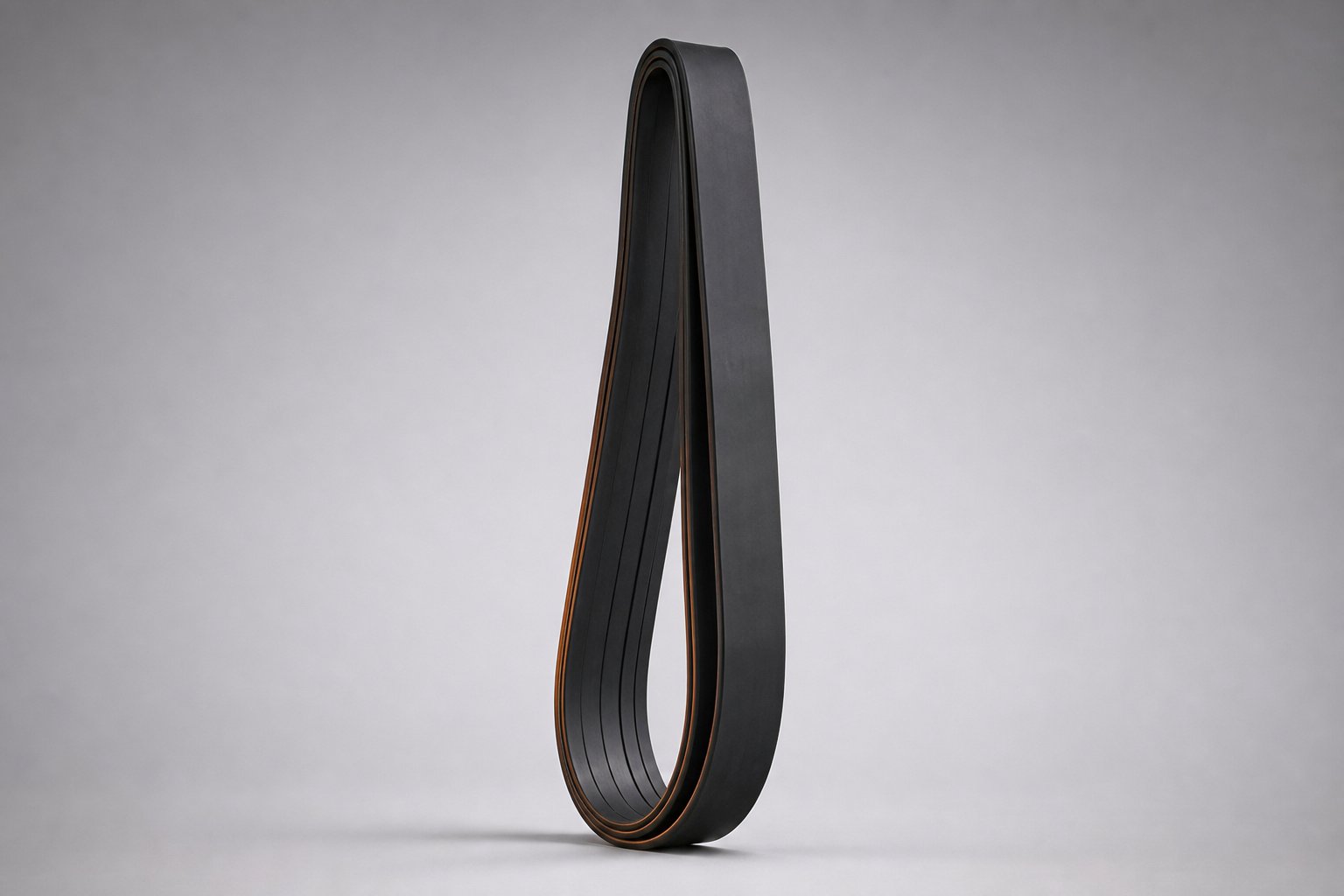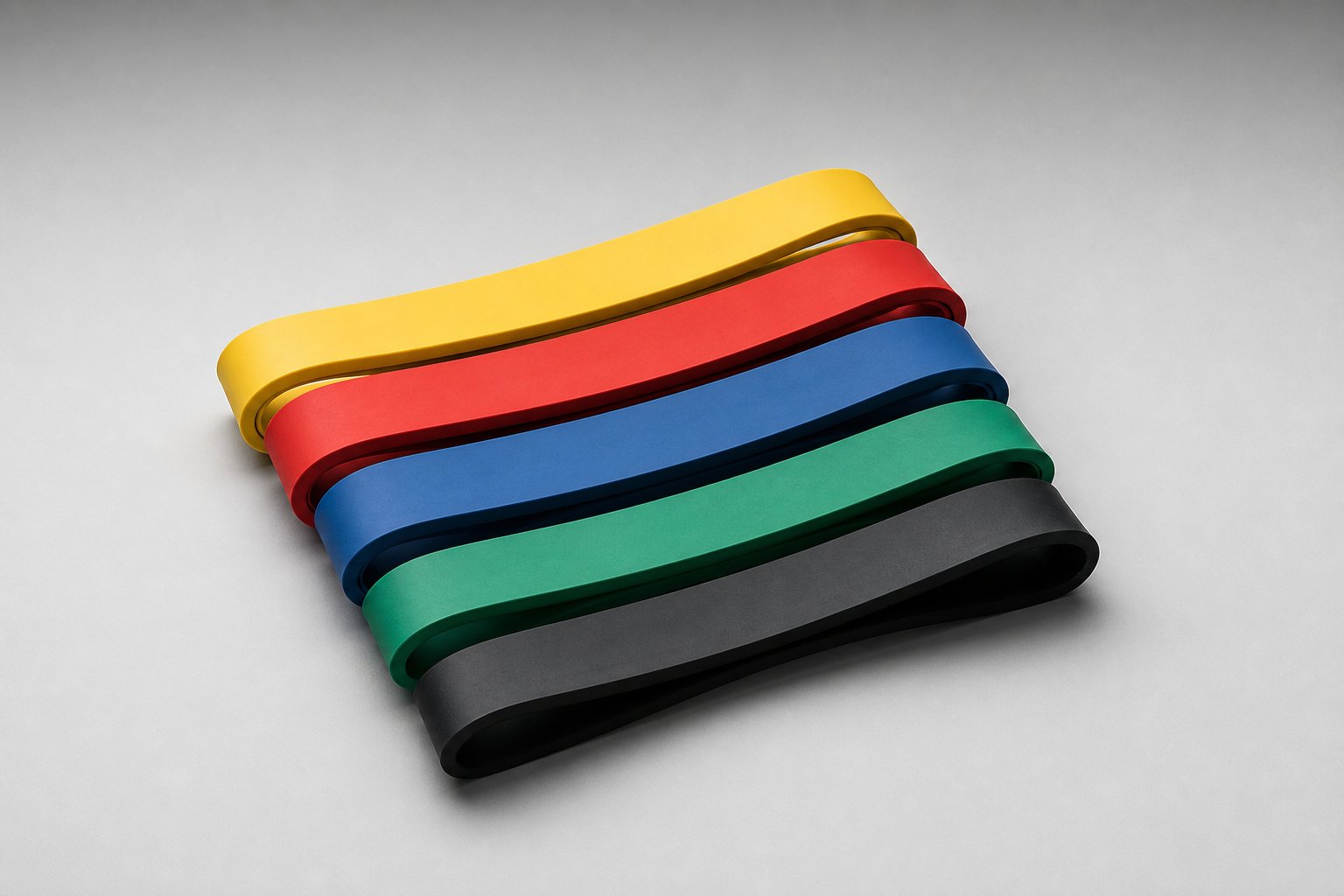
Compare loop, tube, mini and fabric bands against the intended users and exercises. Define composition, dimensions, force at a stated elongation, ageing checks, connectors and instructions. Confirm the supplier’s colour mapping and actual test records rather than assuming colour codes are universal or performance remains unchanged over time.
Equipment and production images are generated illustrations. They do not document a named supplier, factory, test or stocked model.
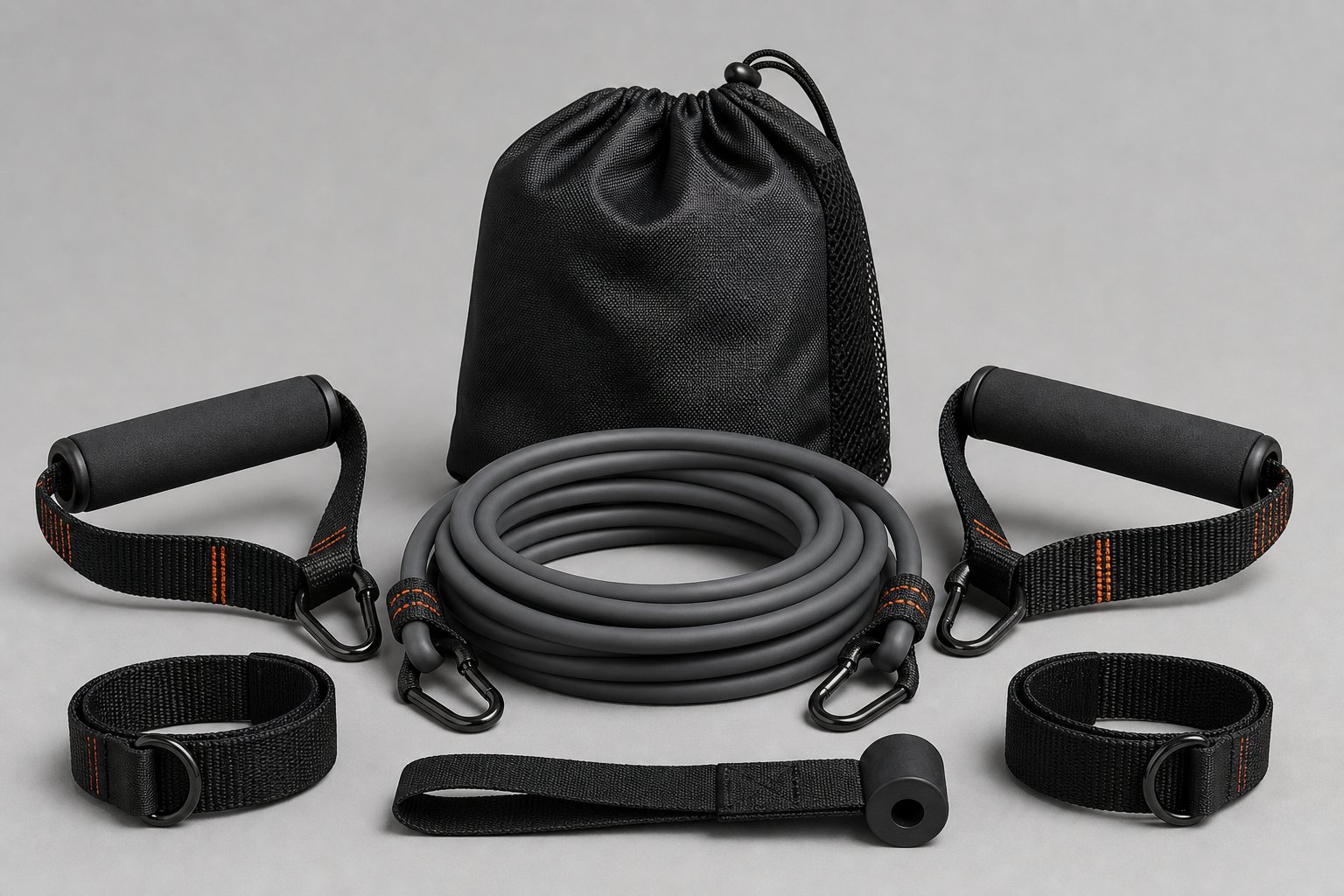
Product names cover different materials and constructions. Compare the actual composition, dimensions, force curve, ageing behaviour and connection design for each proposed SKU. State a measurement method and user instructions so sets can be assessed consistently without implying that colour alone defines resistance or safety.
Define loop dimensions, composition, force levels and colour mapping. Specify set contents, packaging and user instructions, and check actual sample results before approving the range.
Specify length, width, thickness, composition and intended use. Review any therapeutic or rehabilitation claim and the applicable product status before using it in sales material.
List handles, straps, anchors, connectors and carrying items. Check compatibility, force levels, attachment strength and instructions for the complete set.
Compare latex, TPE or other proposed compositions, dimensions and lining construction. Test rolling, grip, force retention and durability under stated conditions rather than making absolute performance claims.
Confirm textile and elastic composition, seams, lining, dimensions and intended exercises. Agree checks for grip, rolling, abrasion and force retention for the proposed product.
Specify loop length, width, thickness, composition, resistance range and force-measurement method. Confirm suitable uses, inspection evidence and warnings for the named model.
| Color code | Force at agreed elongation — request measured values | Proposed use — confirm instructions |
|---|---|---|
| Yellow | Confirm measured range | Assess intended warm-up or training use; review any rehabilitation claim separately |
| Red | Confirm measured range | Compare the proposed resistance with the intended exercises and users |
| Blue | Confirm measured range | Confirm exercise compatibility and user instructions |
| Green | Confirm measured range | Check intended assistance use, anchors and stated limits |
| Black | Confirm measured range | Verify the specific application, attachments and safety instructions |
Define the colour-to-force mapping for the actual supplier, with measured force at stated elongation, tolerances, ageing checks and batch identification. Keep set labels and reorder references consistent, and obtain composition information and substantiation for any latex-free or allergy-related statement.
Compare actual formulations, performance samples, costs, labelling and intended users. Natural latex and alternative polymers require their own evidence. Do not describe TPE as carrying no allergy risk, and obtain substantiation for any latex-free claim.
Agree breaking-force, connector-retention and ageing test methods and acceptance criteria for the actual construction. Review instructions, inspection intervals, storage and use limits. Avoid guarantees against snap-back or injury; confirm the responsible manufacturer and evidence for the product being sold.
Describe the required palette, force levels, packaging, instructions and marking. Confirm material and printing feasibility, sample approvals, quantities, costs and traceability. A QR code may link to actual records, but its presence is not proof of tested performance.
Compare proposed sets using actual packed mass, dimensions, sales-channel demand and total delivered cost. Confirm stock ownership, release work, carrier coverage, dispatch dates and return responsibilities for the selected SKUs and destination.
Compare complementary mat and band ranges and confirm set-level packaging and instructions.
Review intended use and any medical or rehabilitation claims separately for support products.
Define force, elongation, ageing conditions and the actual records needed for the proposed product.
Share your categories, quantities, intended use, destination and target retail price range. Include the required ship date and any known technical, packaging or document requirements so the sourcing team can respond to the specific project.