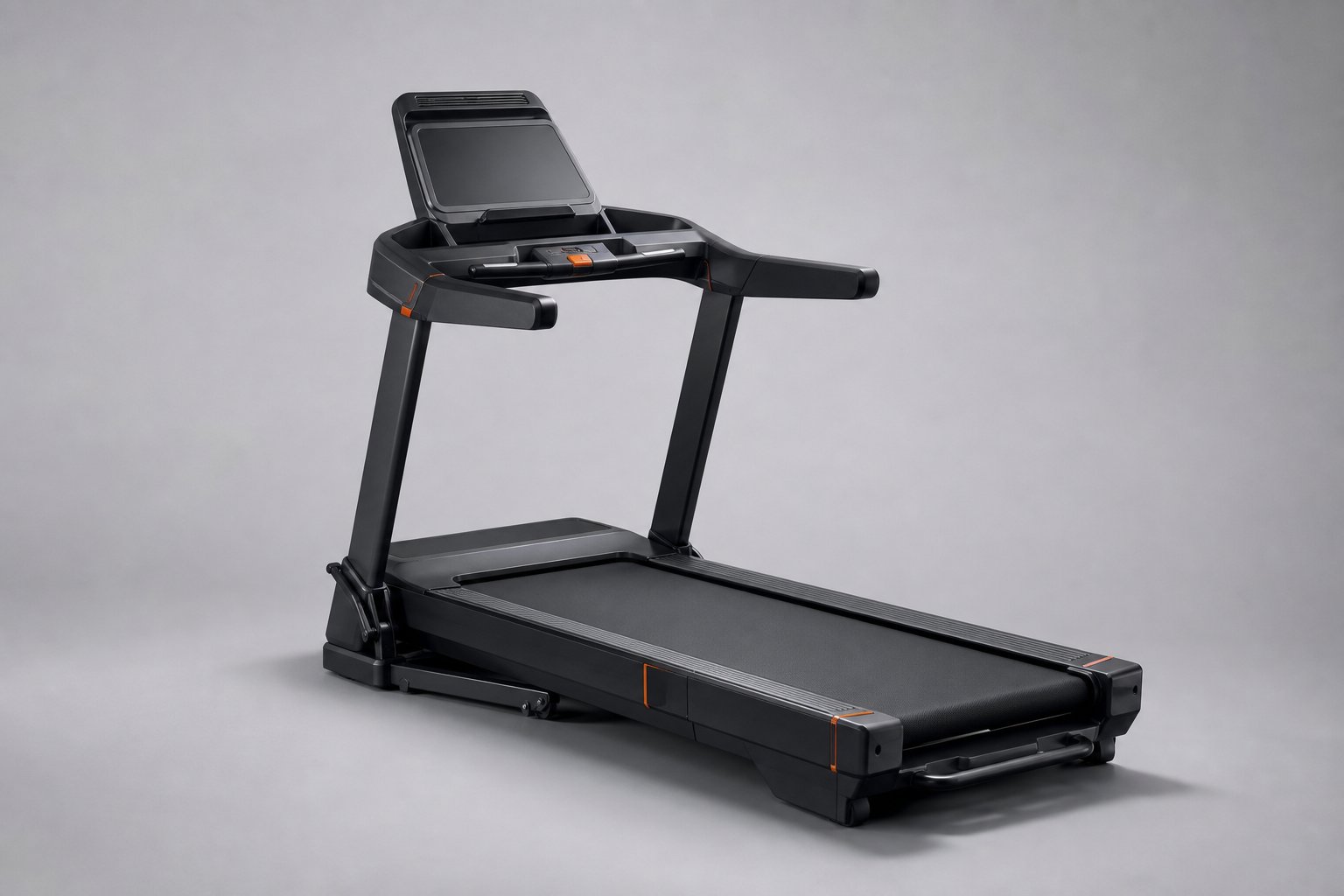
Treadmill listings quote motor horsepower, deck size and console features in detail, but almost never mention the running belt's internal construction or how the deck was tested before shipping — which is strange, because belt and deck quality determine noise, smoothness and how long the unit runs before needing service far more than the motor number most buyers fixate on. A running belt is not a single sheet of rubber; it is a layered composite, and a deck is not just a flat board, it is a surfaced, lubricated system that either performs quietly for years or squeaks and drags within months. This guide covers the belt and deck specs worth asking about that almost no listing volunteers.
Belt construction: what's actually inside a running belt
A quality treadmill belt is a layered composite, not a single material. The base layer is a woven fabric, usually polyester, that provides tear resistance and dimensional stability so the belt does not stretch unevenly under repeated footstrike load. A middle cushioning layer absorbs impact and is the layer most responsible for how a belt feels underfoot — thicker and better-formulated cushioning layers reduce joint impact noticeably compared to a single-layer belt trying to do the same job with one material. The top wear surface is what contacts the deck and the runner's shoes, and its texture and coating determine both grip and how much friction (and therefore heat and wear) the belt generates against the deck during use. Single-layer belts exist at the budget end of the category and are cheaper to manufacture, but they transmit more impact, wear faster under sustained use, and are the primary reason budget treadmills develop a rough, noisy ride within the first year.
Deck material and pre-lubrication
The deck is the board the belt runs across, and its surface material and preparation matter as much as the belt itself. Phenolic-coated MDF or similar engineered boards provide a smooth, low-friction surface that resists the warping plain wood decks can develop from humidity exposure over time. Decks should ship pre-lubricated with a silicone-based lubricant applied at the factory — a dry deck run without lubrication generates excessive friction and heat from the first use, accelerating wear on both belt and deck and often the direct cause of the burning-rubber smell some new treadmills produce out of the box. Ask suppliers explicitly whether decks ship pre-lubricated or whether the buyer is expected to apply lubricant themselves before first use; this is a detail rarely volunteered but easy to disclose.
Break-in testing: the quality check that catches sustained-load defects
Belt tracking issues — where the belt gradually drifts to one side during use — and certain noise defects only become apparent after sustained running time, not during a quick static test. A factory that runs each unit through a 2-hour break-in test before packing, checking for tracking drift and unusual noise under continuous operation, catches these defects before they reach a customer rather than after a return request arrives. This step adds real time and cost to production, which is exactly why some suppliers skip it — asking directly whether break-in testing is standard practice, and requesting documentation of the test log, separates suppliers who build for durability from those optimizing purely for unit cost.
Belt width, length and the "running surface" marketing gap
Belt dimensions are sometimes quoted inconsistently between the physical belt size and the marketed "running surface" area, which can create a mismatch between what a buyer expects and what they receive — a belt described as having a generous running surface may have usable dimensions meaningfully smaller once side rails and console clearance are accounted for. Quoting belt width and length as raw physical measurements, separate from any marketing framing, prevents this category of complaint and gives buyers with larger strides or taller frames the accurate information they need to choose correctly.
Long-term maintenance: what buyers should be told upfront
Even a well-constructed belt and properly lubricated deck need periodic re-lubrication over the unit's service life, typically every 3-6 months under regular home use, and disclosing this maintenance interval upfront — along with whether the unit ships with a re-lubrication kit or requires a separate purchase — reduces support complaints from buyers who assume a treadmill is entirely maintenance-free once purchased. Suppliers who bundle a basic maintenance kit and clear re-lubrication instructions in the box measurably reduce post-sale support load compared to those who leave buyers to discover the requirement on their own.
| Spec | Budget construction | Quality construction |
|---|---|---|
| Belt layers | Single layer | 3-layer composite |
| Deck material | Plain particle board | Phenolic-coated MDF |
| Pre-lubrication | Often dry-shipped | Factory-applied silicone |
| Break-in test | Skipped or spot-checked | 2-hour full run test |
Conclusion
Belt and deck construction determine a treadmill's real-world durability and ride quality more than the motor horsepower number most listings lead with. Ask for belt layer construction, deck material and pre-lubrication, break-in test practice, and honestly quoted belt dimensions, and you will separate suppliers building for years of daily use from those building for a single sale. Send us your target price tier and we will match the belt and deck construction accordingly.
Frequently asked questions
Why does running belt construction matter more than motor horsepower for ride quality? The belt's layered composite structure determines cushioning, noise and durability under footstrike load, which most buyers experience far more directly than motor power in daily use.
What is deck pre-lubrication and why does it matter? A silicone-based lubricant applied at the factory before shipping; a dry deck generates excessive friction and heat from first use, accelerating wear and sometimes causing a burning-rubber smell.
What is break-in testing and why do some suppliers skip it? A 2-hour factory run test checking for belt tracking drift and noise under sustained load; it adds cost and time, which is why lower-cost suppliers sometimes omit it.