Saunas and ice baths are the highest-ticket products in the recovery category, and among the highest-ticket products in home fitness as a whole — comparable retail listings for a single sauna room run to 2,784 dollars — yet the category's supply story is far less crowded than its economics deserve. The market numbers justify the attention: Grand View Research sizes global sauna equipment at 954 million dollars in 2025, rising to 1.56 billion by 2033, with the infrared sub-segment growing fastest at roughly 7.5 percent a year, and values the cold plunge tub market at 355 million dollars in 2025, reaching 660 million by 2033. This guide covers sourcing from the buyer's chair: what the product families actually are, how to select by heat source and by cooling system, why high ticket values make freight engineering unusually forgiving here, and the honest math on minimum orders — because on saunas and chillers, the real commitment is measured in dollars, not units. Sourced well, this is the category where a mid-size store can carry products that look, feel and margin like premium brands.
The market: small today, compounding fast
Recovery wellness is the growth story of the category, and heat-and-cold is its hard-goods core. Grand View Research's sauna report puts the global market at 954.3 million dollars in 2025 with a 6.4 percent CAGR through 2033 — and the infrared segment inside it at 252.7 million dollars growing around 7.5 percent a year, the fastest line in the split. The firm's separate cold plunge tub report shows 354.6 million dollars in 2025 reaching 659.9 million by 2033 — a near doubling in eight years. Two independent reports point the same way: demand for deliberate heat and cold is compounding at price points most fitness sellers never touch. The US market alone is worth 206.4 million dollars in 2025 in the sauna split, making North America the default first market for most resellers.
What the supply actually looks like
The category divides into four product families, each with a distinct buyer and margin profile:
| Family | Spec highlights | Buyer | Positioning |
|---|---|---|---|
| Far-infrared sauna rooms, 1-4 person | Carbon-fiber heating panels, hemlock timber interiors, modular panel construction | Home wellness, clinics, club recovery rooms | The ticket anchor — comparable retail listings run to USD 2,784 |
| Portable steam tents | 2-liter steam generators, foldable, compact boxing | Apartment users, first-time buyers | Entry rung; parcel-friendliest of the family |
| Insulated ice bath tubs | Double-wall insulated barrels, lids, drainage | Athletes, garage recovery corners | Mid-ticket, pairs with every chiller sale |
| Chillers | Integrated filtration and cooling units, set temperature control | Serious cold-plunge users, studios | The repeat-purchase differentiator; electronics-heavy |
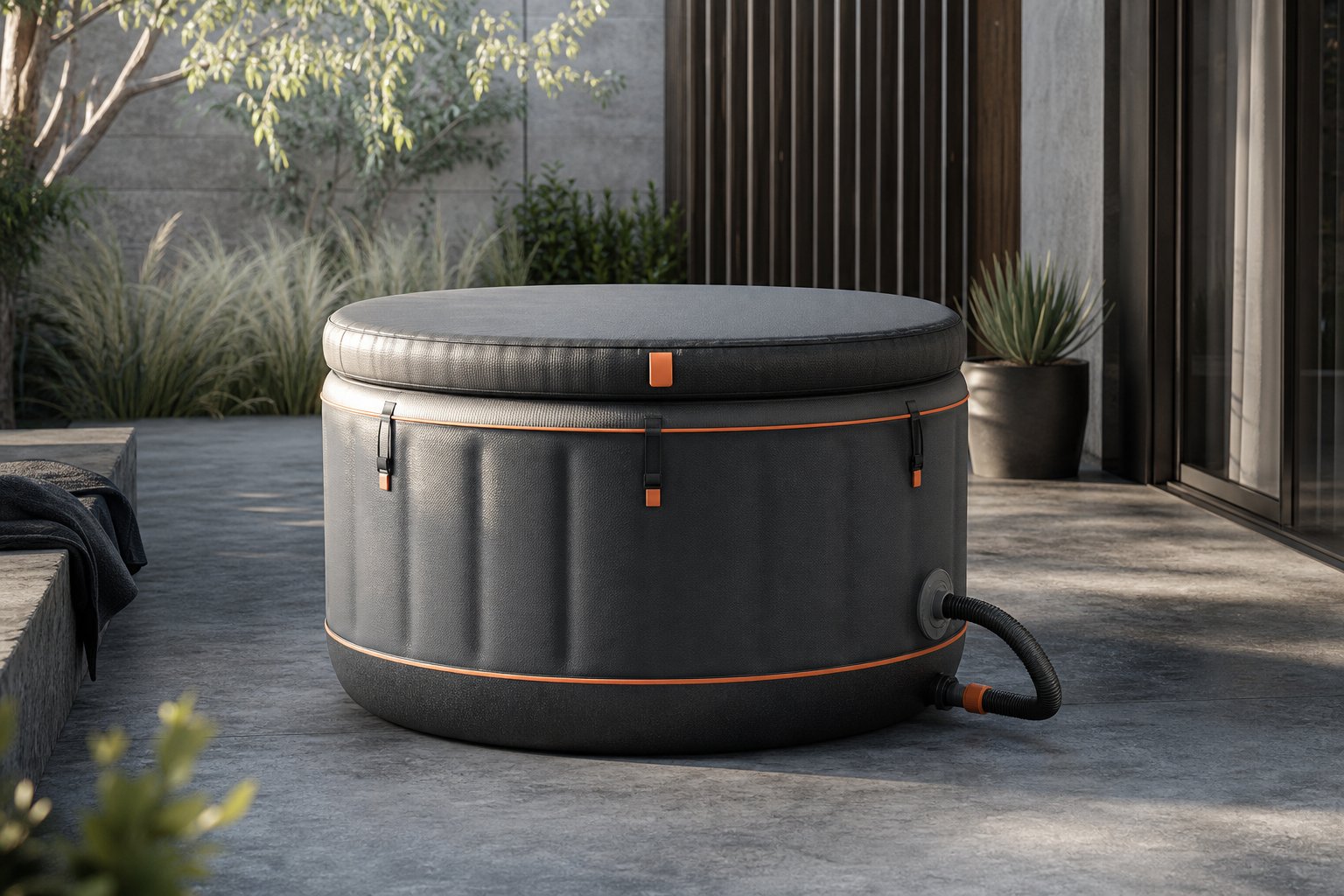
The strategic pairing is the tub-plus-chiller combo: the tub alone is a commodity-adjacent sell, but tub plus chiller is a system — and systems are where tickets, margins and defensibility live. Stores that sell the pair, and service it with spare parts, occupy a different position from stores that sell a barrel.
Selection rule one: the heat source
On saunas, the heat source decides the buyer, the energy story and the freight profile. Far-infrared rooms with carbon-fiber panels heat the body directly with lower cabin pre-heat times and are the segment growing fastest per Grand View Research — they are where new sellers should start. Steam tents trade capability for convenience: minimal freight weight, minimal price, and an honest entry point that converts. Traditional stove-and-stone units, the Finnish configuration, carry heavier electrical requirements, heavier crating and a buyer who expects brand heritage — a difficult first import and not our recommended entry. Wood species matter on all cabins: hemlock is the workhorse interior in this bracket; stability and moisture content by destination climate is a real selection criterion, not a brochure line. Ask any supplier to state panel type, timber species, electrical ratings and cabin dimensions in writing — the four-line spec sheet that separates a sauna from a box that gets warm.
Selection rule two: the cooling system
On cold plunge, the chiller is the product. The specification conversation has three questions: how low does it hold temperature in your climate, how is the water kept clean, and how loud is it on a patio or in a studio. A chiller with integrated filtration and circulation is the configuration to source — stand-alone ice-based tubs reset themselves every session, and buyers who start there buy a chiller within months, just not always from the seller who sold them the tub. For listings, publish the same honesty we require on cardio: stated temperature range, filtration method and noise figure. On electronics, compliance is part of the spec: RoHS applies to the electronic assemblies, and EU-bound units need the CE pathway with the relevant low-voltage and EMC directives — documentation you should receive with the shipment, not request after an inspection.
Margins: why high tickets forgive freight
Heavy goods usually fight freight math; saunas and chillers mostly win it, because the retail anchor is so high. A sauna room listing at 2,784 dollars in comparable retail carries freight — even ocean freight in export wood crates at 25-40 days plus destination handling — as a far smaller share of ticket than a 90-dollar accessory carries parcel cost. The playbook is the same two-lane system we run across heavy gear: ocean head haul into an overseas warehouse, regional last-mile dispatch with curbside or white-glove options, packaging engineered at the packing bench with drop tests, and per-item photo-based replacement when damage happens. White-glove delivery belongs on this category in a way it never does on racks: the buyer is paying premium prices for a wellness ritual, and the last-meter experience is part of the product.
MOQ reality: the commitment is in dollars
The unit ladder looks standard — stocked private-label goods from 100 units, custom builds from 500, deep customization from 1,000 — but on sauna-room-scale tickets, one hundred units is a serious dollar commitment, and pretending otherwise is how inventory stories end. Three mechanisms keep the entry honest. First, ladder the family: enter with ice bath tubs and portable steam tents, where hundred-unit orders are manageable, and add sauna rooms as sell-through proves. Second, use the sampling gate: sampling runs 7-12 days and production 20-35 days after sample confirmation, indicative until contract — test the cabin, the panel heat uniformity and the chiller's holding temperature before the container, not after. Third, pre-position through the warehouse lane so capital is not sitting in destination rents: units that clear ocean freight early and sit in a US warehouse convert to sales in days, not months. Lead times are part of the budget here; recovery demand peaks with the Q4 gift season and January resolutions, and the calendar article's backward math applies directly.
Conclusion
Sauna and cold plunge sourcing rewards exactly two disciplines: select by the engineering that the buyer will feel — heat source, timber, chiller filtration and noise — and respect the dollar-weighted MOQ reality by laddering the family from tubs and steam tents toward sauna rooms. The market data says the segment compounds; the ticket profile says the margins survive freight; and the supply-side machinery is already built. Send us your market and budget band, and we will return a family ladder with specs and indicative costs — stocked private-label MOQ from 100 units.
Frequently asked questions
What is the MOQ for sourcing saunas and ice baths from China? The standard ladder applies: stocked private-label goods from 100 units, custom builds from 500, deep customization from 1,000 — indicative until contract. On sauna-scale tickets the real planning number is the dollar commitment, so ladder in with tubs and steam tents before sauna rooms.
Should I start with infrared saunas or steam tents? Steam tents are the cheapest entry and the most parcel-friendly; far-infrared rooms are the ticket anchor and the fastest-growing segment, at about 7.5 percent CAGR per Grand View Research. A common path is tents first for cash flow, infrared rooms once sell-through is proven.
How are sauna rooms and chillers shipped? By ocean in export wood crates with foam and fixed panels, 25-40 days to major Western markets, then overseas-warehouse storage and regional last-mile dispatch with curbside or white-glove options. High ticket values keep freight a manageable share of landed cost.
What specs should I check before ordering an ice bath chiller? Three: the temperature range it holds in your target climate, the filtration and circulation method — integrated filtration is the configuration to source — and the noise figure. Confirm RoHS compliance for electronics and the CE pathway with relevant low-voltage and EMC directives for EU-bound units.