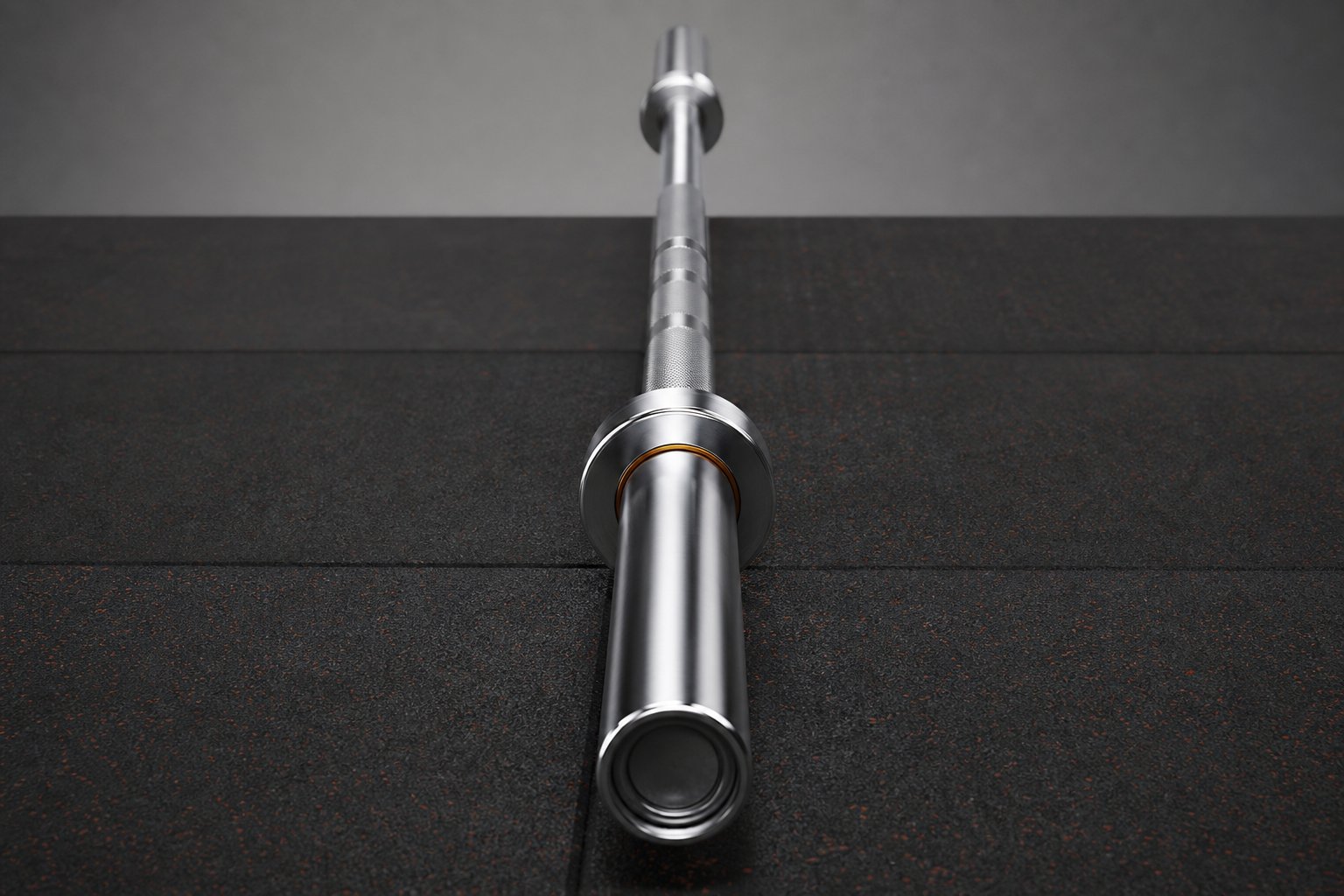
No product in a gym is trusted more literally than the barbell: it is the one object a lifter grips with bare hands while loaded steel rotates above the face. That trust is why bar specs deserve more sourcing scrutiny than almost anything else in free weights — and why a bar that bends, spins rough or chews hands will poison a whole catalog's reviews: every other product touches it. The good news is that the specification language is settled. The men's Olympic reference bar is the 20 kg, 2,200 mm bar with a 28 mm grip shaft and 50 mm sleeves (the women's reference is 15 kg and 2,010 mm), and around those dimensions the meaningful choices are tensile and yield strength, whip, knurling, sleeve rotation and straightness tolerance. Our free-weights line supplies bars against exactly these parameters, with batch-level inspection on weight and fit. This article decodes each parameter, maps bar types to buyers, and closes with tolerance questions and the logistics of stocking a two-meter steel object.
The reference dimensions, and why they are not negotiable
An Olympic barbell is defined by its reference sizes: the men's bar at 20 kg and 2,200 mm total length, the women's at 15 kg and 2,010 mm, both with a 28 mm grip shaft and 50 mm sleeves that accept 50 mm-bore plates. These dimensions exist so that technique, plate fit and rack accessories work across every gym on earth — which is precisely why a supplier's "Olympic-style" bar that drifts from them is not a variant but a defect. Grip diameter matters more than most buyers expect: 28 mm balances grip demands across pulls, presses and cleans, and a bar sold as Olympic must be Olympic in the hand. Sleeve diameter is a compatibility promise to every 50 mm plate you sell — pair it with our plate guide and check both in one inspection. When we qualify a bar, dimensions are checked first; a bar that fails the calipers does not proceed to steel tests.
Tensile and yield: reading the steel honestly
Bar marketing leans on tensile strength — the stress the steel can take before breaking — expressed in PSI or MPa. The honest sourcing view is that two numbers matter and neither should be accepted as an adjective. Tensile strength indicates the grade of the steel itself; yield strength — where the bar permanently deforms — is the number that predicts whether a bar bends under years of loaded drops. A bar can quote a heroic tensile figure and still bend early if its yield value and heat treatment are weak. So demand documentation: the steel grade, mill test certificates for the production batch, and heat-treatment records for shaft and sleeves. Our quality process ties supplier documentation to the batch, and for bars we treat the certificate as a condition of shipment, not marketing material. If a supplier cannot produce material papers for the exact batch you are buying, you are buying a story, not steel.
Whip: matching the bar to the discipline
Whip is the bar shaft's elastic flex under dynamic load — a feel parameter with real consequences. Olympic weightlifting wants liveliness: during a snatch or clean, the bar flexes and rebounds, and a skilled lifter uses that spring. Powerlifting and general strength want stiffness: under a heavy squat or bench, the bar should transmit force directly, not store it. Multipurpose garage and studio bars sit between — enough elasticity to survive Olympic-style drills, stiff enough for slow strength work. Whip is engineered through shaft diameter, steel grade and heat treatment, which is why it cannot be judged from a photo; it is verified by pulling a sample or by trusting a supplier who publishes flex behavior. For catalog sellers the practical rule: name the intended discipline in the listing. The most common bar disappointment is not a bad bar but a bar asked to do a job it was not tuned for.
Knurling and sleeves: what hands and ears notice
Knurling is the crosshatch pattern pressed into the grip, and it decides comfort before strength even enters the conversation. Depth and pitch matter: aggressive deep knurl grips hard and punishes high-rep training; passive knurl is kind to palms and slips when chalk-free. Multipurpose bars aim for medium depth, and markings matter for coaching: dual rings (Olympic and powerlifting marks) make a bar genuinely teachable. A center knurl helps back squats but drags on clean pulls — which is why most multipurpose bars omit it. Sleeves rotate on bushings or bearings to take torque off the wrists during quick lifts. Bushing sleeves are durable and lower-cost, bearing sleeves spin with less effort for Olympic work; either way, sleeve wobble and end-cap play are the defects users film. Spin the sleeve, listen for grit, check axial play — a fifteen-second test that predicts reviews.
| Buyer profile | Shaft and whip | Knurling | Sleeves | Notes |
|---|---|---|---|---|
| Olympic lifting / boxes | Reference 20 kg / 2,200 mm; livelier whip | Medium-aggressive, dual marks, no center knurl preferred | Bearing sleeves, smooth spin | Drop-tested sleeves and end caps essential |
| Powerlifting / serious garage | Stiffer shaft, 28-29 mm class grip | Deeper knurl, center knurl acceptable, power marks | Bushing or bearing, minimal play | Bend resistance documentation requested |
| Home multipurpose | Reference dimensions, middle stiffness | Medium, dual marks | Bushing sleeves | Coated-shaft options for floor safety at home |
| Studio group classes | Reference dimensions, durable mid-grade | Medium, easy to clean | Bushing sleeves, robust end caps | Batch consistency across dozens of bars matters most |
Tolerance, straightness and the batch inspection
Because every other product touches the bar, its tolerances are systemic: a shaft that is not straight makes a good plate look cheap, and sleeves that fit loosely announce themselves within a week. Our free-weights category runs batch-level inspection on weight and fit, and for bars that means four checks: overall weight against the reference (20 kg / 15 kg), shaft straightness with the bar rolled on a surface, sleeve concentricity and axial play, and knurl consistency across the batch. Straightness tolerance and sleeve fit belong in the purchase contract with a stated measurement method — "straight by eye" is not a tolerance. For home lines we also offer rubber-coated shafts where floor protection matters more than competition feel; the trade-off is honest and worth stating in the listing.
Logistics: a two-meter problem, solved by bundling
A 2,200 mm steel bar is the opposite of parcel-friendly: long, thin, heavy, and vulnerable to bending as loose freight. The solutions are structural. Bars travel in long cartons with end protection, strapped as oversized parcels where carriers accept them or consolidated into LTL; container programs pair bars with the racks and plate sets they sell beside — the bundling logic of a garage-gym program — so the bar arrives with its plates in the same delivery event. For dropshipping, bars are a stock-and-ship category via overseas warehouse rather than a per-order parcel; surcharges begin near 50 lb and standard parcels end far below bar weight, so model shipping before pricing. Indicative commercial terms follow our standard frame — stocked private label from 100 units, sampling 7-12 days, production 20-35 days — all confirmed in a formal quotation.
Conclusion
A barbell is five decisions executed in steel: reference dimensions, documented steel grades, whip tuned to the discipline, knurling matched to the buyer's hands, and tolerances written into the contract and checked per batch. Get those five right and the bar becomes the trust anchor of a free-weights catalog — the product every other sale attaches to. Send us your discipline mix and target price band, and we will return bar specifications with material documentation, batch inspection terms and indicative quotes from inside the steel cluster.
Frequently asked questions
What are the standard Olympic barbell dimensions? The men's reference bar is 20 kg and 2,200 mm long with a 28 mm grip shaft and 50 mm sleeves; the women's reference is 15 kg and 2,010 mm. Any bar sold as Olympic should match these reference dimensions — deviations are defects, not variants.
Does a higher tensile rating mean a better bar? Tensile strength indicates steel grade, but yield strength and heat treatment predict whether the bar bends in service. Demand mill test certificates and treatment records for your production batch rather than buying a headline number.
What is whip, and which buyers need it? Whip is the shaft's elastic flex under dynamic load. Olympic lifters use it; powerlifters and general strength users want stiffness. Multipurpose bars sit in between — name the intended discipline in the listing to avoid mismatched expectations.
How should bar straightness be controlled? Put a straightness tolerance with a stated measurement method in the purchase contract and check it per batch — roll the bar on a flat surface along with weight, sleeve fit and knurl checks. A bent shaft makes every plate on it look cheap.