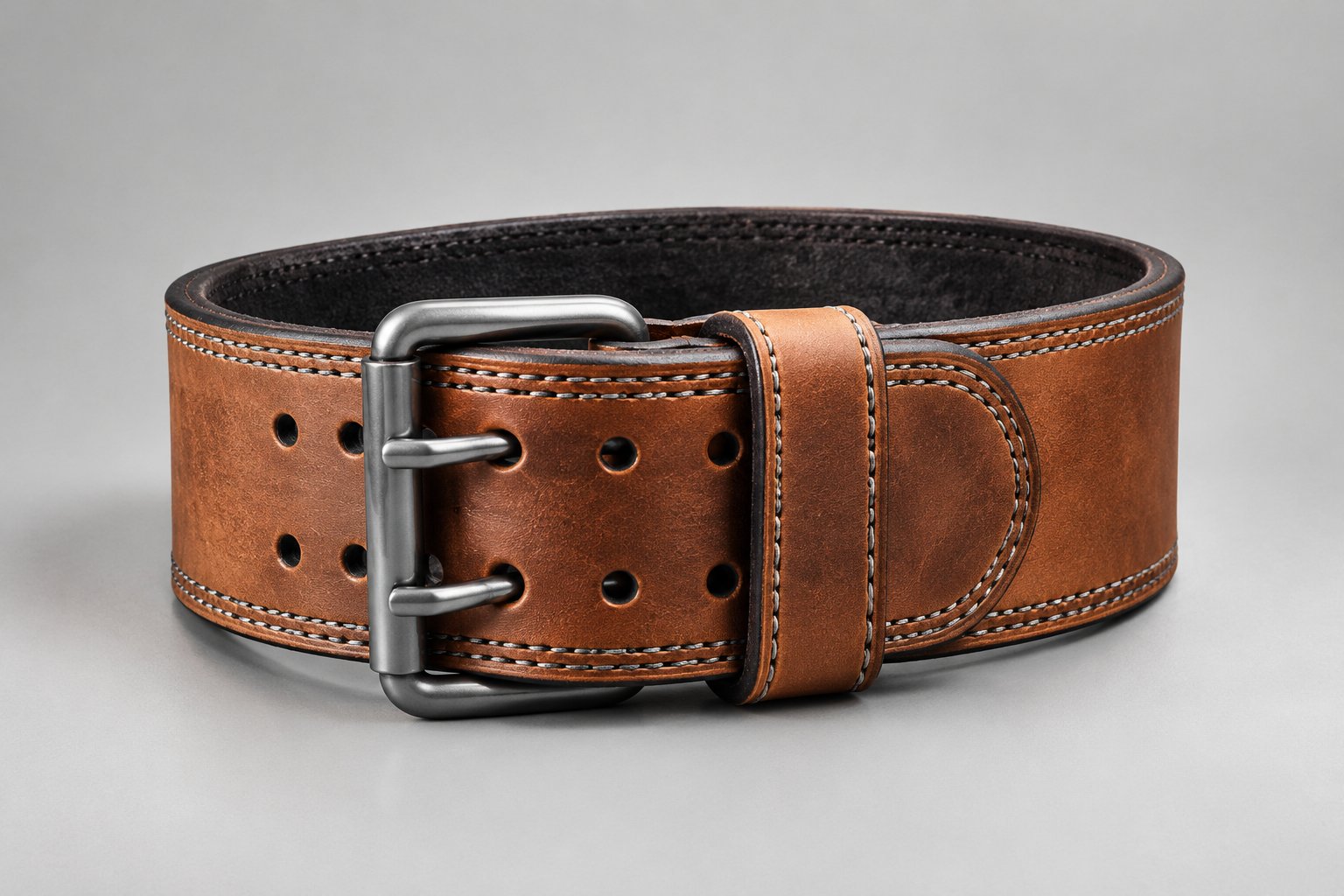
A lifting belt looks like a commodity until a customer puts real weight against it, and then the differences between a 10mm and a 13mm belt, or between leather and nylon, stop being cosmetic. Belts serve two buyer groups with genuinely different needs: powerlifters who want maximum rigidity for a one-rep max, and CrossFit or general-strength athletes who need to move between lifts without unbuckling. Getting the thickness, stitching and buckle spec right for each line is what separates a belt that becomes a repeat-purchase staple from one that gets returned as "too stiff" or "doesn't hold."
Thickness: rigidity versus mobility
Belt thickness is measured in millimeters of full-grain leather, most commonly 10mm or 13mm. A 13mm belt is stiffer and provides the strongest possible intra-abdominal pressure cue for maximal lifts, which is why many raw powerlifting federations cap belt thickness at 13mm rather than banning thickness outright. A 10mm belt is a meaningful step down in rigidity but noticeably easier to break in, bend for sitting between attempts, and wear for a full training session rather than just a top set. Neither thickness is objectively correct — the buyer's sport dictates the spec, and a catalog that offers both with the difference explained converts better than one that only stocks 13mm and loses the general-strength buyer.
Leather versus nylon: two different value propositions
Leather belts (10mm or 13mm, full-grain, single-piece construction is the top tier) deliver maximum rigidity and last years with proper care, but they are heavier, slower to buckle, and typically only adjust in one-inch prong increments. Nylon lever or Velcro belts trade some peak rigidity for speed: a lever belt can be put on and taken off in under two seconds, which matters for CrossFit-style training that moves between belted and unbelted movements inside one workout. Effective nylon thickness usually sits in the 4-6mm range with reinforcement panels, which is enough bracing support for general strength and conditioning work without powerlifting-meet rigidity.
Buckle systems and what they signal
Single-prong buckles are the traditional powerlifting standard: simple, reliable, and legal in essentially every federation. Double-prong buckles distribute load across two holes and are preferred by some lifters for a marginally more secure feel at true maximal loads. Lever buckles trade a small amount of adjustment range for near-instant on/off and are common on CrossFit and general-strength belts. Whichever system a factory uses, the buckle-to-leather rivet should be double-riveted, not single-riveted — this is the failure point under repeated heavy use and worth confirming on any supplier's production sample.
Stitching and width: the details a buyer's hands will find
Four-row box stitching (sometimes called box-X stitching) distributes load across the full width of the belt and holds up under years of repeated max-effort use; two-row stitching is a visible cost-down and a signal to price the belt accordingly. Width should taper toward 4 inches at the front panel so the belt does not catch on a squat rack's J-hooks or interfere with hip flexion in the deadlift setup, even though the back panel can stay a full 4 inches for maximum bracing surface.
| Spec | Powerlifting line | CrossFit / general line |
|---|---|---|
| Thickness | 10mm or 13mm leather | 4-6mm nylon, reinforced |
| Buckle | Single or double prong | Lever or Velcro |
| Stitching | Four-row box stitch | Bar-tack reinforced panels |
| On/off speed | Slower, precise fit | Under 2 seconds |
Sizing and break-in: the return-rate variables nobody quotes
Belt sizing is measured at the navel, not the waistband, and a chart with 2-inch bands (rather than generic S/M/L) is what keeps a belt SKU's return rate manageable — a belt that is one size off either binds painfully at the top of a squat or fails to brace at all. Leather belts also need an honest break-in disclosure: full-grain 13mm leather typically needs 1-2 weeks of regular wear to soften enough for a full range of motion, and a listing that does not mention this generates "too stiff" one-star reviews from buyers who expected day-one comfort. Suppliers who pre-condition leather with a light break-in pass before shipping reduce this complaint meaningfully, and it is worth asking whether that step is included in the standard production process or offered only as a paid add-on, since it is a cheap process step that meaningfully changes the first-week ownership experience for the end buyer.
Conclusion
A belt catalog that explains thickness, buckle type and stitching in plain terms sells both lines without cannibalizing either: powerlifters buy the 13mm leather single-prong belt for rigidity, CrossFit athletes buy the nylon lever belt for speed, and neither customer feels mis-sold. Send us your target sport mix and we will quote the matching thickness, buckle and stitching spec.
Frequently asked questions
Is a 13mm belt always better than 10mm? Not for every buyer. 13mm gives maximum rigidity for competition powerlifting; 10mm is easier to break in and wear for longer training sessions, which suits general strength buyers better.
Are nylon lever belts as strong as leather? They provide less peak rigidity but enough bracing support for CrossFit and general conditioning, with the advantage of near-instant on/off between exercises.
What stitching should I look for on a quality belt? Four-row box stitching across the full width, plus double-riveted buckle attachment — both are visible in a production sample and worth confirming before ordering.