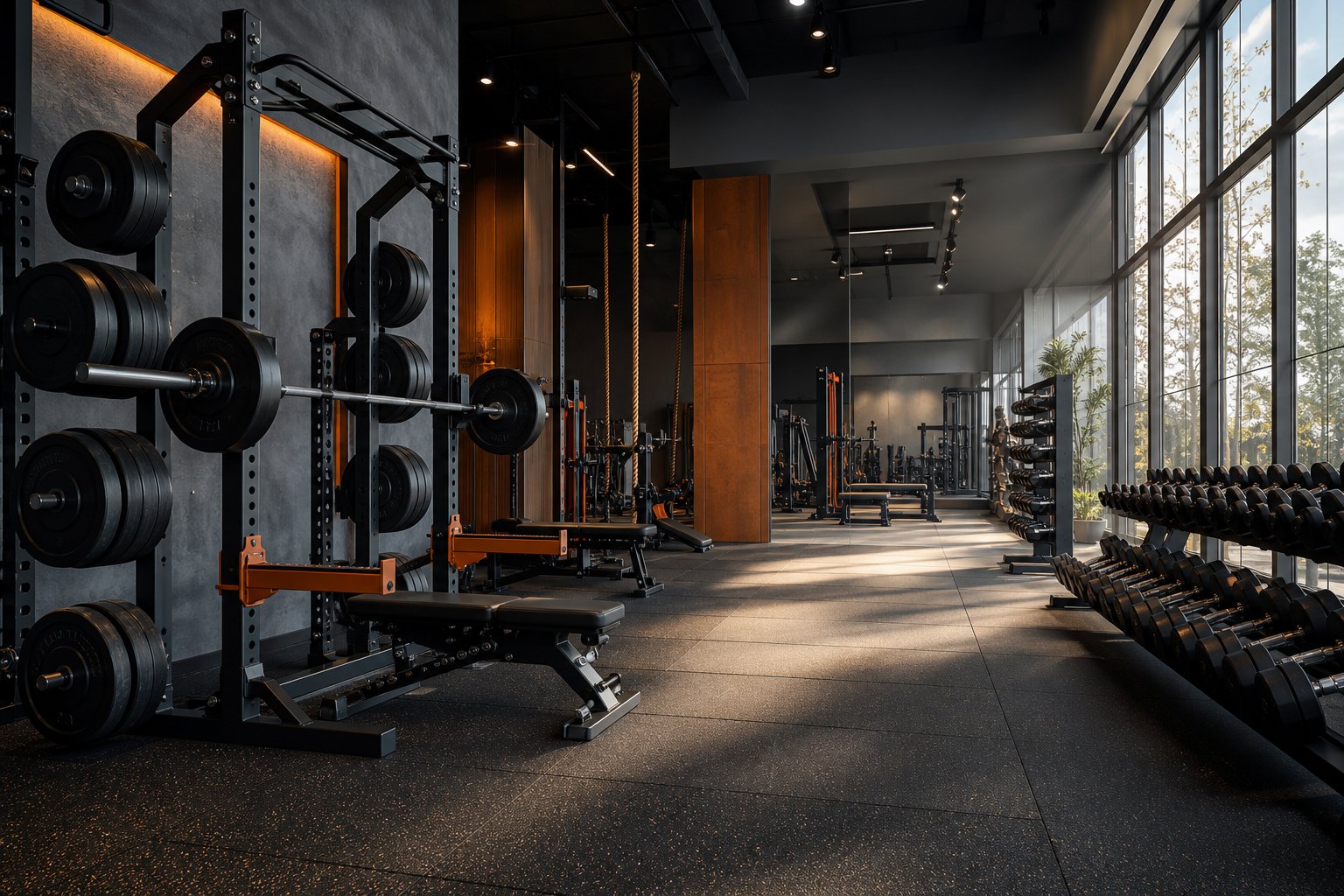
Fitness equipment pairing decisions get made twice — once by the buyer deciding what to stock together, and once by the seller deciding what to ship together — and getting both decisions right is what separates a catalog that moves as complete setups from one that sells scattered single items with no logical connection between them. Rack, bar, plates and bench are an obvious pairing; less obvious pairings, like flooring with heavy strength equipment or recovery tools with a completed strength setup, are where a seller's category knowledge actually shows. This guide covers the pairing logic worth building into both merchandising and container planning.
The core strength pairing: rack, bar, plates, bench
Rack, Olympic barbell, weight plates and an adjustable bench form the most obvious and highest-converting pairing in the entire catalog, because these four items are functionally useless in isolation for the majority of buyers — a rack without a bar cannot be used, plates without a bar have no purpose, and a bench without the rest of the setup only serves isolated dumbbell work. Selling these as a connected package, with hole-spacing and load-rating compatibility confirmed across all four pieces, removes the compatibility research burden that otherwise causes cart abandonment at the configuration stage.
The forgotten pairing: flooring with heavy equipment
Rubber flooring is the single most commonly forgotten pairing with heavy strength equipment, and it is disproportionately important: dropped plates and racked bars transmit impact directly into subfloor without adequate flooring, generating both property damage in rented or shared spaces and noise complaints that are the single most common reason a home-gym buyer's household objects to continued training. Suggesting flooring at the point of a rack or plate purchase — even a modest interlocking tile set — addresses a real problem the buyer may not have anticipated and meaningfully improves the household experience of using the equipment.
Cross-sell pairings: cardio and recovery
Cardio equipment and recovery tools do not need to ship in the same box as strength equipment to make sense as a merchandising pairing — they solve adjacent problems for the same buyer at the moment of decision, since someone building a home gym is thinking about conditioning and post-workout recovery even if those needs come slightly later in their equipment-buying sequence. Surfacing a recovery tool (foam roller, massage gun) or a compact cardio option at checkout for a strength purchase captures purchase intent the buyer already has but may not act on without a prompt.
Container consolidation: pairing heavy and light for efficient shipping
From a logistics standpoint, the pairing question flips: heavy, dense items like weight plates fill a container's weight capacity long before they fill its volume, while bulky, light items like yoga mats or cardio machines fill volume long before weight — pairing these categories in a single container load uses both constraints efficiently rather than shipping like-with-like and leaving either weight or volume capacity wasted. This is a planning-level pairing decision distinct from the merchandising pairings above, but it directly affects landed cost and is worth coordinating with sales forecasting.
Braces and supports: the pairing buyers don't think to ask for
Buyers purchasing heavy strength equipment for the first time rarely think to ask about braces and supports, yet lifting belts and knee sleeves are exactly the products that prevent the injuries most likely to end a new lifter's training habit within the first few months — surfacing these as a low-cost add-on at the point of a rack or barbell purchase serves a genuine buyer need that the buyer often does not yet know they have, rather than functioning as a pure upsell.
Building pairing logic into the catalog, not just the checkout
The most effective version of equipment pairing shows up in category page structure itself — a strength equipment page that links directly to flooring, braces and a starter bundle, rather than treating each category as an isolated silo — because buyers researching one category are frequently in the early stages of planning the adjacent ones, and making that connection visible during research rather than only at checkout captures intent earlier in the decision process.
| Pairing type | Example | Logic |
|---|---|---|
| Core functional | Rack + bar + plates + bench | Useless in isolation |
| Forgotten | Flooring + heavy equipment | Prevents damage/noise complaints |
| Cross-sell | Strength + recovery tools | Adjacent buyer needs |
| Logistics | Plates + bulky light items | Weight/volume balance |
Conclusion
Equipment pairing is both a merchandising decision and a logistics decision, and getting the two aligned — flooring surfaced alongside racks, recovery tools cross-sold at checkout, heavy and light items consolidated efficiently in containers — moves a catalog from scattered single-item sales toward complete setups that reduce buyer friction and improve container economics simultaneously. Tell us your product mix and we will recommend pairing logic for your catalog structure.
Frequently asked questions
What is the most commonly forgotten equipment pairing? Flooring with heavy strength equipment — it prevents both property damage and noise complaints that can end a home-gym buyer's training habit.
Why should braces and supports be surfaced alongside a rack purchase? New lifters rarely think to ask for them, yet they prevent the injuries most likely to end a training habit early, serving a need the buyer doesn't yet know they have.
How does container consolidation pairing differ from merchandising pairing? Container pairing balances weight-dense items with bulky light items for shipping efficiency; merchandising pairing groups items buyers actually use together.