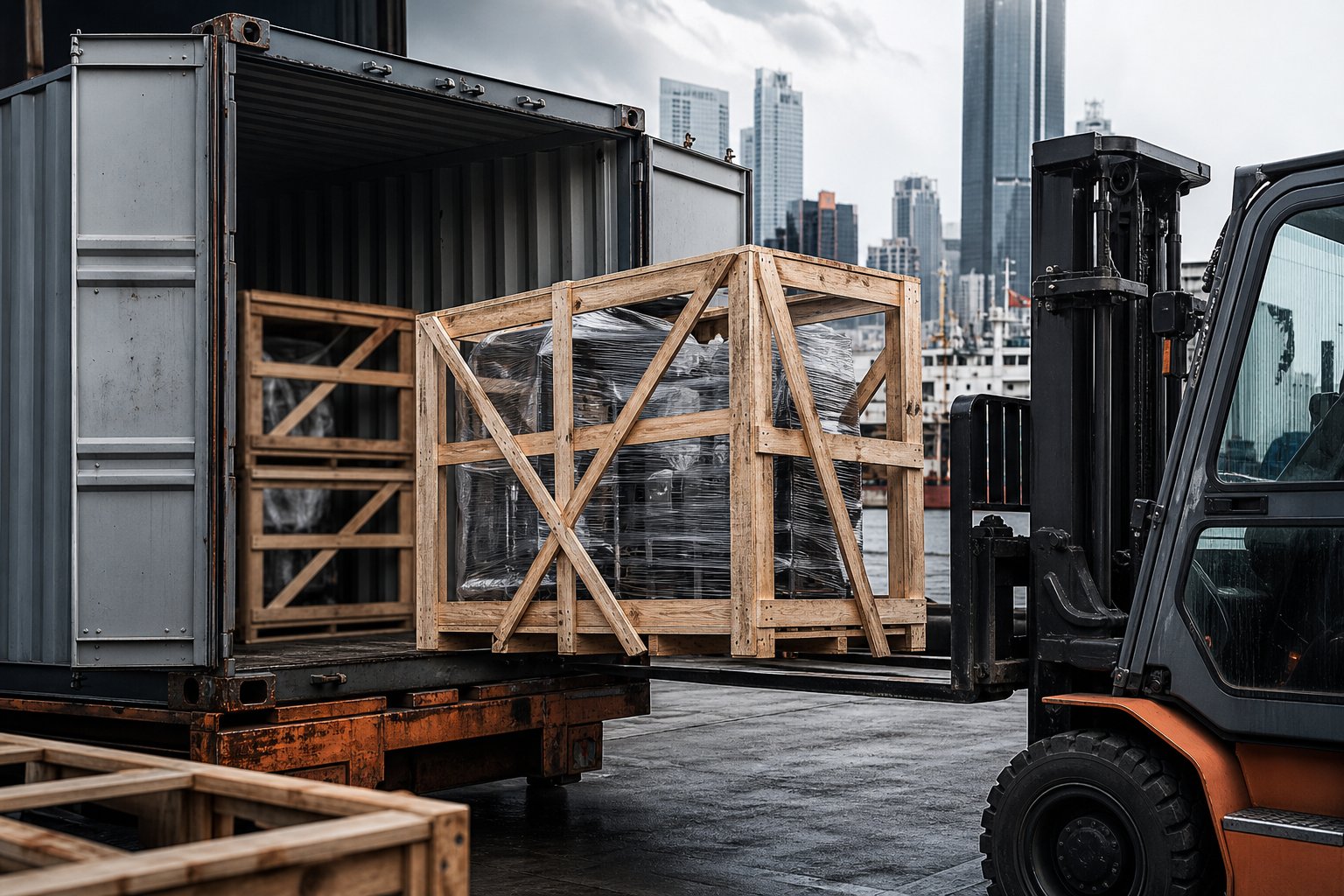
A container loaded with only weight plates hits its weight limit with a third of its volume empty; a container of yoga mats hits its volume limit carrying a fraction of its possible weight. Both are money left on the table, and both are avoided by the same practice: mixed-SKU container planning that pairs dense items with bulky ones so that weight and volume limits are approached together rather than one stranding the other. This guide covers the planning logic, the pairing patterns that work for fitness equipment, and the practical constraints that mixed loads add.
Why single-SKU containers strand capacity
Weight-dense products like iron plates and dumbbells reach a 40HQ container's payload limit at maybe half to two-thirds of its volume, meaning the container ships with paid-for cubic capacity unused. Volume-dense products like yoga mats, foam rollers and boxed softgoods fill the cube while carrying perhaps a fifth of the possible weight. Either container ships with one constraint stranded, and freight cost per unit is correspondingly higher than it needed to be. The fix is not a different container but a different mix: combining the two categories in planned proportions so both limits are approached together.
The planning math: carton-level, not category-level
Mix planning fails when done with category averages — actual carton weights and volumes vary enough within categories that a plan built on averages can hit a constraint unexpectedly. The workable method is a spreadsheet or load-planning tool into which each SKU's actual carton weight, dimensions and carton count are entered, then combined in trial proportions until both the weight total sits safely under the payload limit and the volume total sits at realistic utilization (80-85 percent of cube, not 100). It is an hour of planning that prevents the far more expensive alternative: discovering at the port that the load needs re-working.
Pairing patterns that work for fitness equipment
Recurring pairings in practice: weight plates or dumbbells paired with mats and softgoods; kettlebells paired with foam rollers, balls and boxed accessories; racks and benches (bulky but mid-weight) paired with compact heavy items like adjustable dumbbell sets. The general principle is pairing whatever is weight-heavy in the current order book with whatever is volume-heavy, and the pairing shifts order by order — which is why the planning step belongs in every ordering cycle rather than being solved once.
The constraints mixed loads add
Mixed containers complicate a few things single-SKU loads do not: customs declarations cover multiple product categories with different HS codes in one container, requiring accurate per-SKU documentation; destination unloading needs a sequence plan when some cartons are needed before others; and final carton counts must be confirmed before carrier cut-off times, which means the factory's production completion dates across multiple SKUs need coordinating. None of these is difficult, but all of them are real, and a first-time mixed loader should expect the coordination overhead before the savings arrive.
Working with freight forwarders on mixed loads
A freight forwarder experienced in mixed commodity loads adds real value at this stage: they can validate the load plan against the carrier's actual weight tolerance, advise on declaration structure for the mixed HS codes, and coordinate the loading supervision that ensures the plan executed matches the plan designed. Sellers running mixed loads for the first time should involve the forwarder in the planning conversation early rather than presenting a finished plan — the forwarder's corrections are cheapest while the plan is still a spreadsheet.
Recurring versus opportunistic mixing
Some sellers build recurring mixed-load templates — a standing proportion of dense-to-bulky that matches their steady-state sales mix — while others mix opportunistically per order based on what happens to be due. Recurring templates are simpler to operate and easier to optimize over time; opportunistic mixing captures savings on irregular orders but re-does the planning work each cycle. Most sellers land on a hybrid: a standing template for core replenishment, with opportunistic adjustments when the order book shifts — and whichever pattern a seller picks, the discipline that matters is the same, namely re-checking the load plan against actual carton measurements every cycle rather than trusting last quarter's numbers, since packaging specs drift quietly between production batches and a plan built on stale measurements fails precisely when the container is already booked and the factory is waiting.
| SKU type | Binding constraint alone | Pairs with |
|---|---|---|
| Plates, dumbbells | Weight | Mats, softgoods |
| Kettlebells | Weight | Foam rollers, balls |
| Racks, benches | Volume (mid-weight) | Compact heavy sets |
Conclusion
Mixed-SKU container planning pairs whatever is weight-heavy with whatever is volume-heavy so both limits are approached together, and the savings compound on every order cycle. Plan at carton level with real dimensions, expect the added coordination around declarations and cut-off times, and involve your forwarder while the plan is still a spreadsheet. Send us your current order mix and we will sketch a matching load plan.
Frequently asked questions
Why does a plates-only container waste money? Dense iron products exhaust the weight limit at perhaps half to two-thirds of container volume, shipping paid-for cubic capacity unused.
What planning precision does mixed loading need? Carton-level weights and dimensions per SKU in a load plan, not category averages - averages hide the variance that causes port-side re-plans.
What extra coordination do mixed loads require? Multi-HS-code declarations, destination unloading sequence, and coordinating multiple SKUs' completion dates against carrier cut-off times.