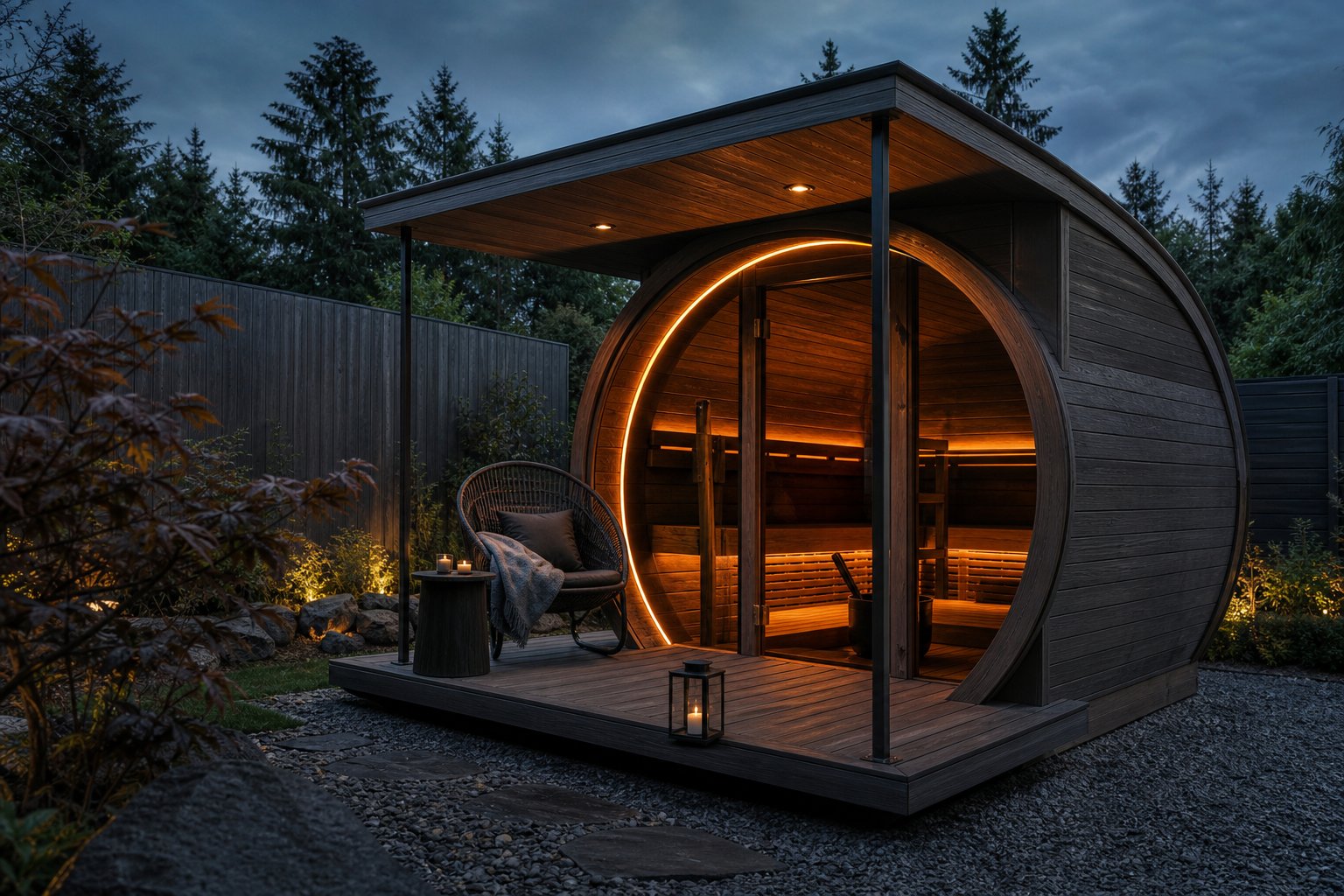
The wood a sauna cabin is built from is not a finish choice, it is a structural and durability decision that shows up years later as either a tight, mold-free cabin or one with warping panels and a musty smell. Three material families dominate the category — Canadian hemlock, cedar, and thermally modified wood — and each carries a different moisture-resistance profile, cost point and climate fit. Sellers who explain the actual wood science, rather than just listing species names, help buyers avoid the single most common regret in cabin purchases: choosing a species mismatched to their local humidity.
Hemlock: the category's default for good reason
Canadian hemlock is the most common sauna interior wood by volume, and for practical reasons: it grows straight with minimal knots, finishes to a light, even color that reads as clean and premium, and is available at a scale and price point that supports the category's mainstream SKUs. Its natural moisture resistance is moderate rather than exceptional, which is entirely adequate for well-ventilated cabins with proper drainage but means hemlock benefits more than cedar from correct installation — vapor barriers, ventilation gaps and sealed joints matter more when the wood itself is doing less of the moisture-resistance work.
Cedar: genuine resistance, genuine premium
Cedar's natural oils give it real resistance to moisture, decay and insects without chemical treatment, which is why it remains the benchmark premium choice for buyers who want the longest service life with the least maintenance. It also carries a distinct aroma that is part of the traditional sauna experience for many buyers and is frequently cited in reviews as a differentiator worth the price gap. The tradeoff is straightforward: cedar costs meaningfully more per cubic meter than hemlock, and supply is more regionally concentrated, which affects lead times for large orders.
Thermally modified wood: changing the wood, not just choosing it
Thermal modification heats wood to 180-230°C in a low-oxygen environment, which permanently changes its cellular structure to reduce moisture absorption and improve dimensional stability — panels that thermally modified wood produces resist the warping and gapping that untreated wood can develop in humid climates. This process works on multiple starting species, including lower-cost softwoods, which means thermally modified wood can deliver cedar-like stability at a price point between hemlock and true cedar. Buyers serving humid coastal or tropical markets should weight this option seriously, since it directly addresses the failure mode most common in those climates.
Matching wood species to buyer climate
Climate compatibility is the specification buyers most often skip until a cabin starts showing problems after its first humid season, which makes it worth surfacing proactively on a listing rather than waiting for a support ticket to raise it. The single most useful thing a seller can do is connect wood choice to the buyer's actual climate rather than presenting species as a pure aesthetic or budget choice. Humid coastal, tropical or high-rainfall markets should be steered toward cedar or thermally modified wood, where moisture resistance is doing real structural work. Dry inland or continental climates have more flexibility and can use hemlock successfully with standard ventilation practice, reserving budget for other spec upgrades like heater wattage or glass door quality instead.
| Wood | Moisture resistance | Relative cost | Best fit |
|---|---|---|---|
| Hemlock | Moderate (needs good ventilation) | Base | Dry/continental climates |
| Cedar | High (natural oils) | Premium | Humid markets, premium buyers |
| Thermally modified | High (process-driven) | Mid-premium | Humid/coastal, cost-conscious |
Ventilation and joinery: what determines whether the wood choice actually matters
Even the best wood species underperforms in a cabin with poor ventilation design, and this is where installation quality can undo a good material decision. A correctly built cabin needs an intake vent low near the heater and an exhaust vent high on the opposite wall, creating airflow that carries moisture out rather than letting it settle in corners and joints. Tongue-and-groove joinery with enough seasonal movement allowance prevents the gapping and cracking that shows up in cabins built with tight, glued joints that cannot expand and contract with humidity cycles. Suppliers who can speak specifically to ventilation ratio and joinery method, not just wood species, are the ones worth building a long-term sourcing relationship with, since these details determine whether a cabin still looks new after three years of regular use or develops the warping and mustiness buyers associate with cheap builds. This is worth stating plainly to buyers comparing quotes on wood species alone, since two cabins built from identical cedar can perform very differently once joinery and ventilation are factored in — the wood grade is only half the durability story.
\nConclusion
Wood species is a durability decision disguised as an aesthetic one. Match hemlock to dry climates and budget SKUs, cedar to premium buyers who want maximum natural resistance and aroma, and thermally modified wood to humid markets that need stability without cedar's full price tag. Tell us your target market's climate and price tier and we will recommend the matching wood spec.
Frequently asked questions
Is cedar always worth the price premium over hemlock? For humid climates and buyers prioritizing longevity and aroma, yes. For dry climates with good ventilation, hemlock performs adequately at a lower price point.
What does thermal modification actually do to wood? Heating wood to 180-230°C without chemicals permanently changes its cellular structure, improving dimensional stability and moisture resistance regardless of the starting species.
How should climate affect my wood species choice? Humid, coastal or tropical markets should prioritize cedar or thermally modified wood; dry inland climates have more flexibility with standard hemlock.