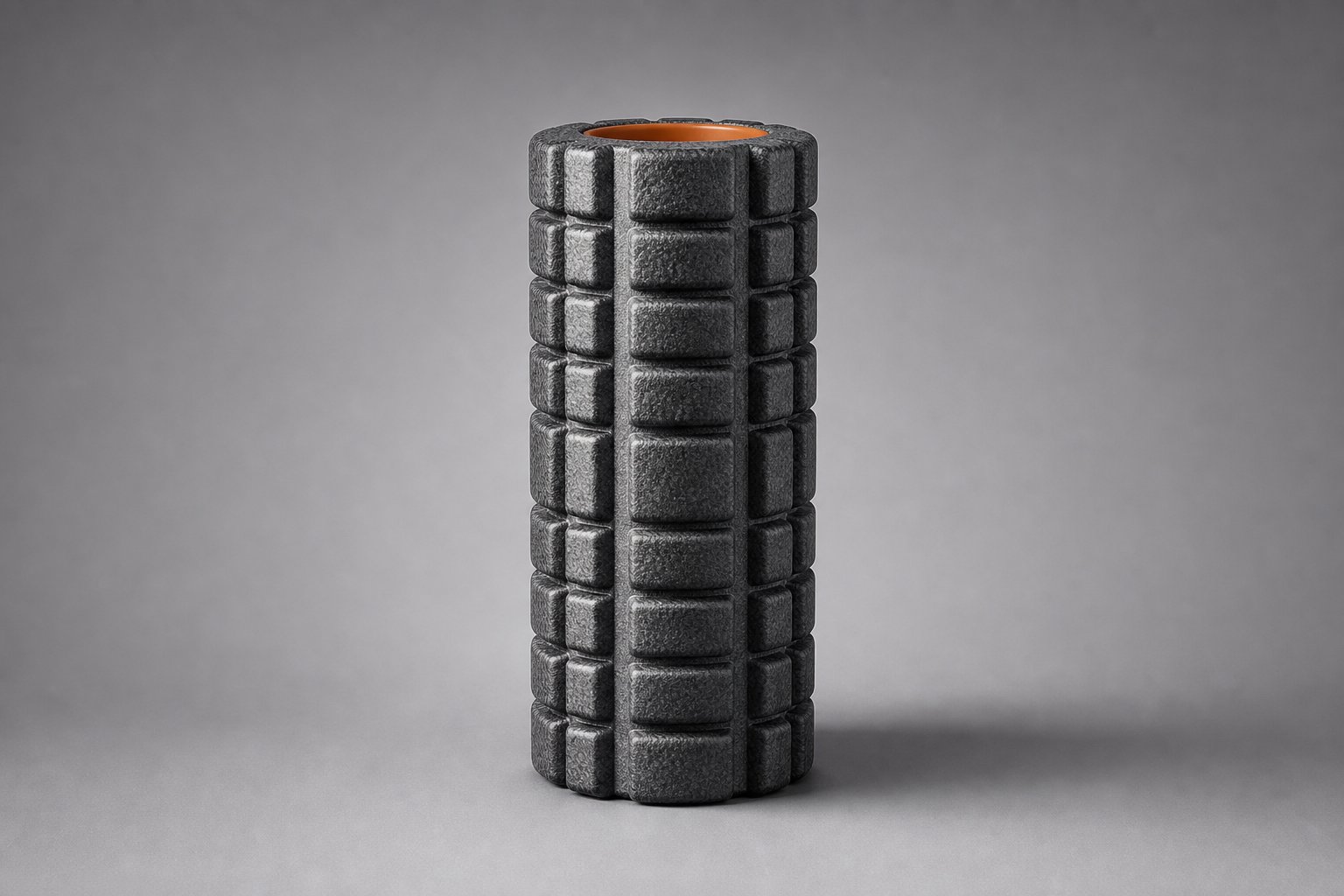
The foam roller has quietly become the entry ticket to the recovery category: it costs little, weighs little, and turns a fitness store into a recovery store with a single listing. It is also the recovery product sellers get wrong most often, because the catalog vocabulary — EPP, EVA, high-density, grid, smooth — is used carelessly across listings, and buyers return products that never matched their expectations of firmness. The fix is not more jargon; it is a clear structure. A foam roller decision has exactly three layers: the foam material, which sets firmness and how the roller ages; the surface texture, which sets how intense the contact feels; and the scenario, which decides which combination belongs in front of which buyer. We build our accessories line around that structure, and this article lays it out the same way we present it to sellers — material first, texture second, scenario third — so you can spec a roller line that generates five-star reviews instead of firmness complaints.
Material first: EPP versus EVA
Two foams dominate the roller market, and the letters matter less than what each one does under a user's body weight. EPP — expanded polypropylene — is the firmer of the two. It resists compression, keeps its shape through months of use, and delivers the deep, unyielding contact that experienced users ask for when they want real pressure on large muscle groups. EVA — ethylene-vinyl acetate — gives more under load. The surface yields as the user settles onto it, the contact feels gentler, and the roller is more forgiving for someone new to self-massage or using it primarily for gentle mobility work. Neither foam is better; they serve different users. The commercial mistake is selling an unlabeled firmness: a beginner who wanted gentle contact receives a roller that feels like a pipe, reviews it as painful, and the listing absorbs the blame for a mismatch the material choice created.
The practical spec discipline is simple. State the material by name — EPP or EVA — and describe the feel in one honest sentence: firm and unyielding, or cushioned and forgiving. If you carry both, put them in one listing family with a firmness selector, exactly as shoe sellers handle width. This costs nothing at sourcing time and removes the single most common roller complaint before it happens. Our own accessories line follows that rule: EPP builds for the firm tiers, EVA for the softer entry tiers, with the material declared on the page.
Texture second: the three surface families
Surface texture decides how intensely the roller contacts tissue, and the market sorts cleanly into three families. Smooth rollers are the gentlest: an even surface spreads contact, nothing catches, and the tool is at its best for beginners, for the spine-adjacent areas where ridges are unwelcome, and for anyone using the roller as part of a warm-up routine rather than deep self-massage. Medium grid rollers — the familiar patterned surface — are the category's workhorse and usually its bestseller: the pattern varies the pressure, users can angle around tender spots, and the experience sits comfortably between smooth and aggressive. Deep-ridged rollers concentrate contact into harder ridges and valleys; they are the experienced user's tool for dense, well-used legs and backs, and they generate the strongest love-it-or-too-much split in reviews. The stocking logic writes itself: smooth for entry listings, medium grid as the default bestseller, deep-ridged as the niche extension for the audience your reviews will train you to recognize.
One honesty note for listings: texture intensity is subjective, and the same grid that one buyer calls perfect another calls harsh. The defense is expectation-setting in copy and images — show the surface at real scale, describe who each texture suits, and put the beginner-appropriate option first in the variant selector. Rollers are a recovery aid for warm-up and post-training routines; they are not medical devices, and listings should say what the product is for rather than what it cures.
The matrix: material, texture and buyer mapped to channel
Put the three layers together and the assortment becomes a small, defensible matrix:
| Build | Feel under load | Best-fit user | Scenario | Channel positioning |
|---|---|---|---|---|
| EVA smooth | Cushioned, most forgiving | Beginners, gentle mobility, older buyers | Warm-up and easy evening routines | Entry listing; home recovery corner starter |
| EPP smooth | Firm but even | Regular home users | Daily post-training routine | Core home listing; bundle-friendly |
| EPP medium grid | Firm with varied pressure | Most active users — the default choice | Post-training recovery work | Bestseller tier; pairs with massage gun content |
| EPP deep-ridged | Most intense, concentrated | Experienced users, dense muscle mass | Targeted deep self-massage sessions | Niche extension for trained audiences |
| Mini travel roller | Matches parent build | Travelers, studio bags | Compact warm-up anywhere | Cross-sell add-on; parcel-perfect |
This matrix also maps cleanly onto the three recovery-zone packages we organize at our recovery hub: a foam roller sits in the home recovery corner as the floor of the assortment, appears again in the studio recovery zone where clients share equipment, and survives in a club recovery room as the zero-maintenance fallback between massage devices. One product, three budgets — which is why the category earns its place in almost every fitness catalog.
What to demand from a roller supplier
Foam is a category where the spec sheet hides everything that matters, so the qualification list is short and physical. Demand the material declaration by name — EPP or EVA, not high-density foam — and a sample you can press with your thumb and compare against a known reference. Check shape retention after sustained load: a roller that dents overnight in a warm container will not survive a summer warehouse. Inspect the skin or surface layer for tearing at the edges where rollers take their worst abuse. Confirm dimensional honesty — length and diameter measured, not assumed — because travel rollers that run large defeat their own purpose. And for soft polymer goods sold into Europe, hold the line we apply across our yoga mat and foam products: phthalate documentation under the 0.1 percent ceiling of REACH Annex XVII, declared per batch. None of these checks costs more than a sample shipment; together they are the difference between a roller line and a returns line.
Channel fit and the commercial frame
Rollers are parcel-friendly in the extreme: light, unbreakable, shipped in retail color boxes under our accessories standard, and simple to blind-ship in neutral packaging with no supplier traces — which makes them a natural first recovery SKU in a dropshipping catalog alongside bands and jump ropes. For private-label programs, the indicative frame on our line is the same as across light accessories: stocked labeled goods from 100 units, light customization from 500 units, sampling in 7-12 days and production in 20-35 days, with 48-hour dispatch on in-stock labeled orders — subject to the formal quotation. For assortment, open with an EPP medium grid as the bestseller default plus an EVA smooth as the beginner anchor, add a mini roller as the cross-sell, and let review data tell you whether the deep-ridged niche deserves stock.
Conclusion
A foam roller program fails on mismatched expectations, not on foam quality. Name the material, sort the texture into its three families, match each build to a named buyer and scenario, and set expectations in the listing before the box is opened. Do that, and a two-SKU opening set covers most of the market at almost no inventory risk. Send us your audience and price tier, and we will return a roller line — material, texture and packaging specified — with indicative quotes. As a source supply chain partner inside China's fitness equipment clusters, we would rather hand you a structured assortment than a carton of hope.
Frequently asked questions
Which foam roller density should a beginner buy? A softer EVA build with a smooth surface. It gives under body weight, spreads contact evenly and builds the habit without the intimidating firmness. Experience users can step up to an EPP medium grid once the routine sticks.
What is the difference between EPP and EVA rollers? EPP is a firmer expanded polypropylene that resists compression and holds its shape through heavy use; EVA is a more yielding foam that feels gentler under load. Name the material on the listing and describe the feel honestly — most firmness complaints trace to unlabeled or mismatched builds.
Are textured grid rollers better than smooth ones? Neither is better; they serve different users. Smooth suits beginners, gentle mobility and spine-adjacent use; medium grid is the versatile bestseller; deep ridges concentrate pressure for experienced users. Stock all three families if your audience is broad, with grid as the default.
What should I check before ordering rollers from a supplier? Material declaration by name, thumb-test samples against a reference, shape retention after sustained load, edge-tear resistance, measured dimensions, and phthalate documentation under the 0.1 percent REACH Annex XVII ceiling for European sales. Batch inspection records complete the file.