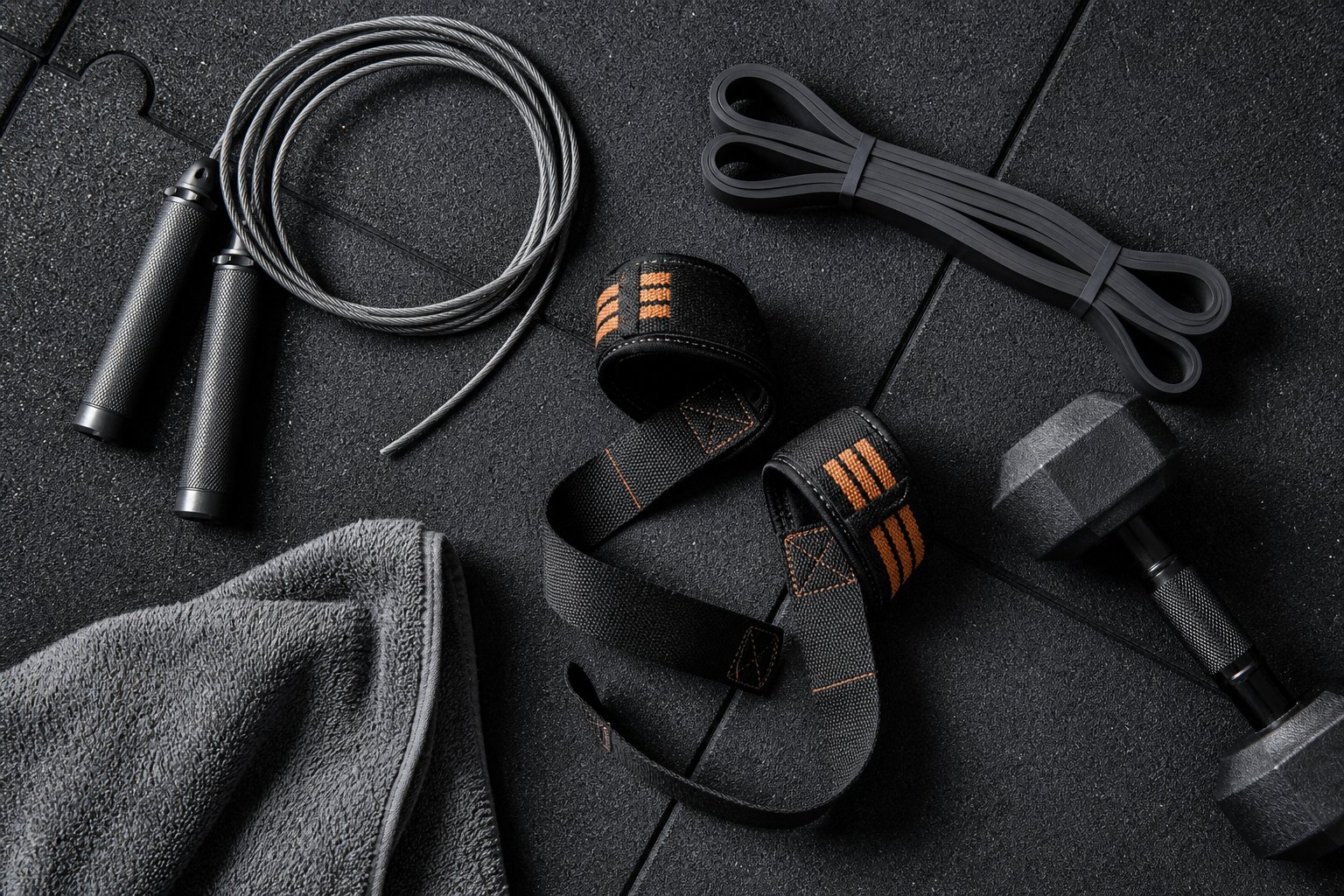
Conventional dropshipping wisdom has one commandment for fitness: sell bands, braces and mats, and never touch anything with weight. The advice is not stupid — it is a rational response to freight rates, damage risk and bulky returns. But it is also why the light end of the category is a knife fight while the heavy end is nearly empty: in our benchmark scan of comparable fitness stores, none of the sixteen sites made an explicit dropshipping commitment, and not one carried large strength equipment. Heavy fitness gear is hard precisely because most suppliers lack the system for it — and that is an addressable weakness, not a law of nature. This article lays out the playbook we run as a source supply chain partner: two fulfillment channels that let one store sell a resistance band set and a power rack from the same catalog, the eight failure points of heavy gear and the upstream answer to each, and the packaging, spares and returns machinery that keeps a 60-kilogram shipment from becoming a chargeback. Heavy is a systems problem. Systems can be built.
Why everyone says sell small — and why that ends the conversation too early
The numbers behind the caution are real. US parcel networks apply additional-handling fees past about 50 pounds, cap standard parcels at 150 pounds (USPS at 70), and raised base rates about 5.9 percent in 2025, per fulfillment-industry reporting. A 100-pound home gym can crush single-wall cartons in normal handling. A return on a 100-pound rower means freight-grade pickup, two-person handling and re-packaging — costs that delete a margin outright. Facing that, content across the dropshipping world recommends beginners stick to braces, bands and jump ropes. Fair. But notice what that consensus builds: a crowded light end where every seller offers the same $1.7 waist brace and the same mat, and an abandoned heavy end where racks, smith machines and rowers — the products with real ticket sizes — sit behind a logistics wall almost nobody will build the machinery to cross. Difficulty is not disqualification; it is the barrier that makes the position defensible.
The eight failure points of heavy gear — and the upstream answer to each
Heavy gear fails in known ways, which means it can be engineered against. The mapping we operate:
| Failure point | What goes wrong | Upstream answer |
|---|---|---|
| Freight escalates with weight | Parcel pricing collapses past 50 lb | Heavy items bypass parcels: ocean head haul + overseas warehouse + regional LTL last mile |
| Transport damage | Stacking and handling crush weak cartons | Triple-wall cartons, foam inserts, export wood crates; drop-test packing standard |
| Returns are nightmares | Bulky pickup, inspection, re-boxing | Photo-based damage assessment; returns graded at the warehouse; parts-first resolution |
| After-sales parts vanish | Seller has no spares channel | Wearing parts ship in-carton; warranty parts dispatch direct to end users |
| Ordinary warehouses refuse bulky goods | Floor storage, forklifts, trained staff needed | Heavy-capable overseas warehouse with floor storage and handling equipment |
| Compliance and landed cost | Duty stack surprises at entry | Landed-cost modeling per SKU on the current tariff schedule before quoting |
| Few carriers take oversize | Limited options, weak tracking | LTL network with curbside and white-glove options priced in advance |
| Beginners self-censor | New sellers avoid heavy entirely | Supplier-side system does the heavy lifting; the store sells both weight classes |
The two-channel playbook
The core design decision is that one catalog runs two lanes, matched to weight class:
| Channel | What moves | Mechanics | Economics |
|---|---|---|---|
| Parcel-direct lane | Bands, braces, jump ropes, accessories, walking pads under 30 kg, yoga gear | Stocked goods dispatch within 48 hours of payment; neutral blind labels — no price tags, no supplier marks, no promo cards; ERP integration with Shopify, WooCommerce and Amazon; specialist response within 24 hours | Fast turnover, low cash tie-up, reorder weekly in season |
| Ocean-plus-warehouse lane | Racks, benches, smith machines, rowers, treadmills, sauna and ice-bath items | Ocean FCL/LCL head haul (25-40 days); overseas warehouse receives, assembles, relabels and stores; last mile by regional LTL with curbside or white-glove options | Freight per unit falls sharply once landed; high ticket sizes carry the margin |
The lanes interlock commercially. The parcel lane builds the customer file and cash flow; the warehouse lane sells the trust-heavy, high-ticket items that light-only stores cannot touch. Adjustable dumbbells illustrate the bridge: boxed weight is heavy but split-able, so they can test on the parcel lane and graduate to warehouse pre-positioning as volume proves.
Packaging is engineering, not wrapping
Damage control starts at the packing bench, which in our production line is the eighth and final process step: pack, then drop-test. The standard stack for heavy goods is triple-wall corrugated cartons, foam inserts with parts fixed in compartments, and export wood crating for the heaviest stations. This matters commercially for a reason sellers often miss: in dropshipping, the supplier's packing standard becomes the store's damage rate. A store cannot out-service a carton it never specified — so specify it, in writing, before the first heavy order, and ask for packing photos with the loading documentation. When damage still happens, resolution is mechanical: per-item replacement against photos, no blame archaeology. First orders can include a 2 percent spares allowance so the fix is already on the customer's continent.
Returns without the nightmare
Bulky returns cannot be eliminated, but they can be made survivable in three moves. First, prevention: honest dimensions, stated boxed weights and installation videos in the listing kill the largest return cause — the buyer who did not expect the thing to be that big. Second, grading instead of reflex: returned goods are photographed and assessed at the warehouse, then routed to repair, refurbish-and-relist, or scrap, rather than every unit becoming a full-loss write-down. Third, parts-first policy: where a fix is possible with a cable, a pulley or a knob, the part ships direct to the end user instead of the machine crossing the country twice. A returned rack handled this way costs a fraction of the folklore number — and the customer stays a customer.
What this means for your store
Positioning follows capability. If your supplier can run both lanes, your catalog can open with the heavy-trust SKUs — a rack-and-bench bundle, a rower — flanked by light accessories for acquisition and replenishment, which is precisely the shape of a defensible fitness store rather than another mat shop. The benchmark gap is the invitation: most stores will keep selling the same light catalog to each other's audiences while the heavy end stays empty for whoever builds the system once.
Conclusion
Heavy fitness gear defeats sellers who treat dropshipping as a parcel-only game — and pays those who run it as a two-channel system: 48-hour parcel-direct for light goods, ocean-plus-warehouse for heavy, packaging and spares engineered upstream, returns graded instead of feared. The machinery is the moat, and it transfers to your store the moment the supply side is right. Send us your category shortlist and we will tell you which lane each SKU belongs in, with the packing and dispatch terms in writing — 参考 MOQ from 100 units on stocked private-label goods.
Frequently asked questions
Can you really dropship power racks and treadmills? Yes, through the warehouse lane rather than parcels: ocean head haul in 25-40 days into an overseas warehouse that assembles, labels and stores the goods, then regional LTL with curbside or white-glove options for the last mile.
What happens when a heavy item arrives damaged? Resolution is per-item replacement against photos. Packaging is engineered upstream — triple-wall cartons, foam inserts, wood crating and drop-test standards — and first orders can carry a 2 percent spares allowance so replacements are pre-positioned.
How does blind dropshipping protect my brand? Parcels go out under neutral labels with no price tags, no supplier information and no promotional cards, and your store name stays the only one the customer sees; ERP integration keeps orders flowing from Shopify, WooCommerce or Amazon.
What should a beginner stock first if I want to enter heavy gear? Bridge SKUs: adjustable dumbbells and sub-30 kg cardio on the parcel lane to build reviews and cash flow, while the first container of racks or rowers moves slowly through ocean freight into the warehouse — so the heavy end opens already funded.