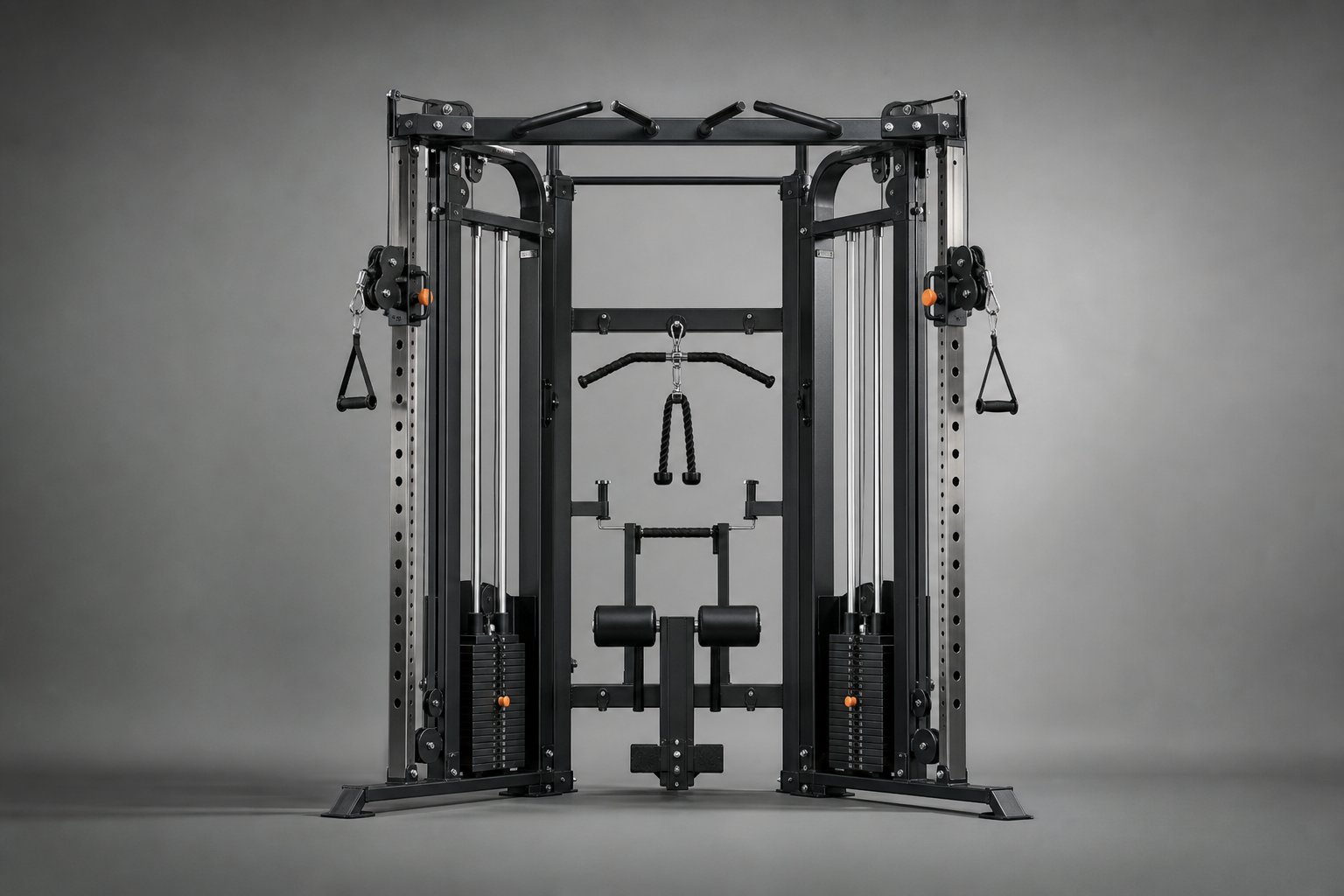
A cable machine without attachments is an expensive steel frame that does nothing; the attachments are what actually deliver the exercise variety buyers are paying for, and yet they are routinely treated as an afterthought bundled in almost as packing filler rather than as the product feature that determines repeat satisfaction. Handles, ropes and bars each solve a different grip and movement pattern, and the materials and connection hardware behind them determine whether an attachment ecosystem lasts as long as the frame it is bolted to or becomes the first thing that needs replacing. This guide covers what belongs in a complete attachment set and the specs that separate a durable one from a disposable one.
The five-piece starter set that covers most exercises
A genuinely useful starter attachment set does not need to be exhaustive to be complete: a straight bar for pressing and curling movements, a tricep rope for pushdowns and extensions, a pair of single D-handles for unilateral rows and presses, a lat pulldown bar for back work, and an ankle strap for cable kickbacks and hip work together unlock the large majority of common cable exercises a buyer will want to perform. Selling this five-piece set as a bundle alongside a cable machine, rather than listing each attachment separately and letting the buyer guess what they need, converts more completely and sets a fair expectation for what the frame alone cannot do.
Connection hardware: the part that actually holds the load
Every attachment connects to the cable through a carabiner, spring clip or screw-pin connector, and this small piece of hardware is disproportionately important because dynamic exercises repeatedly snap-load the connection far harder than the cable's static working-load rating implies — a connector rated only to the machine's stated weight stack maximum, with no safety margin, is undersized for real use. Connectors should carry a rated capacity meaningfully above the stack's maximum weight, and the gate mechanism should be smooth enough for one-handed operation between sets without buyers fighting a stiff or corroded clip mid-workout.
Rope and strap materials: where fraying actually starts
Tricep ropes and ankle straps fail almost exclusively at the connection point, where repeated flexing under load concentrates stress on a small area of material — a rope with reinforced stitching or a molded connection collar at that point lasts dramatically longer than one relying on simple looped rope alone. Nylon webbing for straps should be a dense weave rather than a thin, cost-reduced strap, since thin webbing both frays faster and digs into skin under load, generating the discomfort complaints that show up disproportionately in attachment reviews relative to their low unit price.
Handle ergonomics: grip diameter and knurl
Handle grip diameter and surface texture affect comfort far more than most buyers expect from a small accessory — a handle too thin for a larger hand or with an overly aggressive knurl for high-rep work generates blisters and grip fatigue that undermine an otherwise well-built cable machine. Rubber-coated grips with moderate texture suit the widest range of hand sizes and rep ranges, while more aggressive knurled steel handles serve buyers specifically training grip strength, a distinction worth stating on a listing rather than assuming one handle type serves all use cases.
Storage and organization: the detail buyers notice after the sale
A growing attachment collection needs somewhere to live, and a simple wall-mounted rack or hook system sold alongside the attachment set — rather than leaving buyers to pile attachments in a box — measurably improves the post-purchase experience and is frequently mentioned favorably in reviews for reasons unrelated to the attachments' core function. This is a low-cost addition that signals a supplier thought through the full ownership experience, not just the point of sale.
Bundling strategy: attachments as an ecosystem, not an afterthought
The commercial opportunity in attachments is recurring, not one-time: a buyer who starts with the five-piece set frequently returns for a lat pulldown bar upgrade, a second handle pair, or a specialty bar as their training progresses, provided the connection system stays consistent across the product line. Suppliers who commit to a stable attachment interface across frame generations build exactly this kind of repeat-purchase relationship, which is a stronger long-term commercial argument than optimizing each attachment sale in isolation.
| Attachment | Primary use | Failure point to check |
|---|---|---|
| Straight bar | Press, curl | Grip coating wear |
| Tricep rope | Pushdown, extension | Connection-point fraying |
| D-handles | Unilateral row, press | Carabiner rating |
| Lat pulldown bar | Back work | Grip diameter comfort |
| Ankle strap | Kickback, hip work | Webbing density |
Conclusion
Attachments are not packaging filler for a cable machine sale — they are the feature that actually delivers exercise variety, and the connection hardware, rope reinforcement and handle ergonomics behind them determine whether that promise holds up over years of use. Bundle a genuine five-piece starter set with every frame sale and commit to a stable connection interface across your product line. Tell us your target frame line and we will match a matching attachment set.
Frequently asked questions
What attachments should be included with a cable machine by default? A straight bar, tricep rope, D-handle pair, lat pulldown bar and ankle strap cover the large majority of common cable exercises.
Why do carabiner and clip ratings matter more than they seem? Dynamic exercises snap-load connectors harder than static hanging weight, so a connector rated only to the stack's static maximum is undersized for real use.
Where do ropes and straps typically fail first? Almost always at the connection point, where repeated flexing under load concentrates stress; reinforced stitching or a molded collar there extends service life significantly.